

Top 10 Streetwear Brands Everyone Should Know in 2026
Thirty years ago, streetwear belonged to skaters, graffiti writers and kids screen-printing tees in a back room. Today it's a multibillion-dollar industry that sets the pace for Paris runways and has luxury houses buying, copying or collaborating with brands that started on a street corner.
But in 2026, hype isn't enough anymore. The brands that actually matter are the ones building communities, telling their own stories and making clothes that mean something to the people wearing them. New York still carries weight, London keeps breaking the rules, Spain has turned into an unlikely powerhouse, and Venezuela has a voice in the conversation too.
These are the 10 streetwear brands you need to know in 2026: the pioneers who wrote the rules and the new names rewriting them.
1. Supreme
From: New York, 1994 · Founder: James Jebbia · Official site
Supreme opened its first store on Lafayette Street in downtown Manhattan in April 1994. It was a skate shop with one simple rule: make clothes for the people who hung out there. Three decades later, it's still the blueprint every modern streetwear brand has copied.
The brand made weekly Thursday drops a ritual, and with them came the lines, the anticipation and the resale culture the rest of the industry adopted. Its Box Logo, a nod to the work of artist Barbara Kruger, is arguably the most coveted logo in streetwear history.
Collabs with Nike, The North Face, Comme des Garçons and Louis Vuitton (2017) erased the line between the street and the luxury world. The numbers back it up: VF Corporation bought Supreme in 2020 for $2.1 billion, then sold it to EssilorLuxottica in 2024 for $1.5 billion.

2. Corteiz
From: London, 2017 · Founder: Clint Ogbenna (Clint419) · Official site
Corteiz (CRTZ) is the most disruptive brand to come out of London in the last decade. Clint built it without traditional advertising: a password-locked website, last-minute drop announcements and a community that feels like it's in on something most people aren't.
Its signature move is the guerrilla drop, real-world events where fans chase clues across the city to get their hands on a piece. The most famous was 2023's "Da Bolo Exchange," where people traded in jackets from expensive brands for a Corteiz one. Marketing that turned into culture.
The Alcatraz logo and the "Rules The World" slogan sum up the attitude: a jailbreak from the fashion system. Its cargos became a London uniform, and its Nike Air Max 95 collabs took the brand fully global.

3. Denim Tears
From: United States, 2019 · Founder: Tremaine Emory · Official site
Denim Tears is what happens when fashion is used to tell history. Tremaine Emory created the brand to explore the African diaspora experience and Black American history through clothing.
Its best-known symbol is the cotton wreath printed across denim, a direct reference to slavery on American cotton plantations. Wearing Denim Tears isn't just following a trend. It's carrying a piece of social commentary on your body.
Collabs with Levi's, Converse, Stüssy and UGG expanded its reach, and Emory served as Supreme's creative director from 2022 to 2023. Few brands prove better that streetwear can also be memory.

4. Kith
From: New York, 2011 · Founder: Ronnie Fieg · Official site
Ronnie Fieg started working in the stockroom at David Z., a Manhattan shoe store, when he was 13. Years later he launched Kith and turned it into the brand that best owns the space where streetwear, sport and luxury meet.
Its collab list reads like a directory of everything that matters: Nike, Adidas, New Balance, ASICS, BMW, Versace and Coca-Cola. Kith proved a streetwear label can sell a premium basic hoodie and design a car with BMW in the same year.
Its stores work as experiences, down to Kith Treats, its cereal and ice cream bar. The tees, hoodies and outerwear blend high quality with pop culture and sports references, pulling in sneakerheads and luxury shoppers alike.

5. Aimé Leon Dore
From: Queens, New York, 2014 · Founder: Teddy Santis · Official site
Aimé Leon Dore (ALD) grew out of Teddy Santis's memories as the son of Greek immigrants raised in Queens. The brand mixes '90s nostalgia, neighborhood basketball, European polish and the New York of his childhood.
ALD is known less for a single item and more for a whole world: rugby shirts, knitwear, varsity jackets, caps and a Mulberry Street flagship with its own café. Every collection feels like a short film about a specific place and time.
Its New Balance partnership was key to reviving the 550 in 2020, and since 2021 Santis has led New Balance's Made in USA line. Proof that streetwear can dress with quiet confidence instead of shouting.

6. Caracas Merch
From: inspired by Venezuela, designed for the world · Roots: the Caracas No Es Loca community · Official site
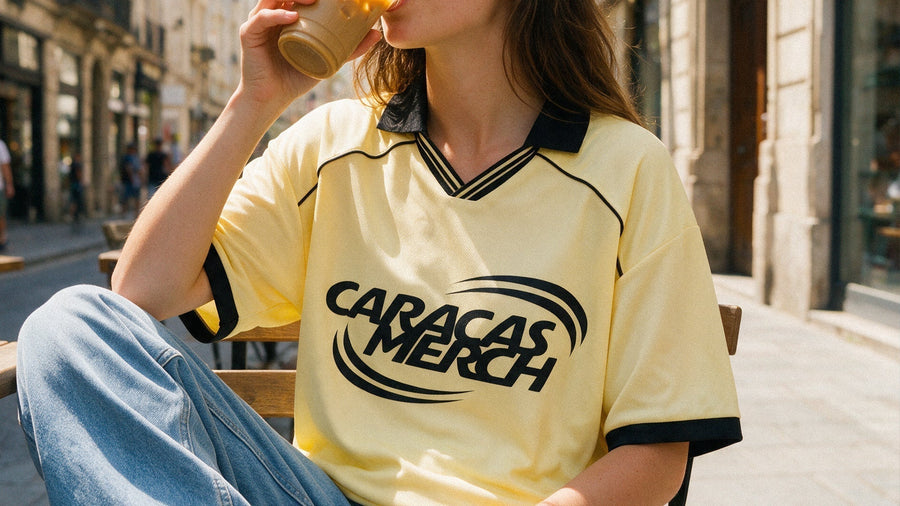
Caracas Merch is a streetwear brand inspired by Venezuelan culture and built to global standards. It grew out of Caracas No Es Loca, a community launched in 2019 that brings together hundreds of thousands of people, but the goal was never to stay niche. The goal is clothing that can hold its own on any shelf in the world.
The brand works on two levels. For a Venezuelan, every piece is a nod to home, to the slang, to the city. For someone who's never set foot in Caracas, it's simply well-made streetwear: solid quality, considered fits and graphic design with an aesthetic that stands on its own. You don't have to be from New York to wear Aimé Leon Dore, and you don't have to be Venezuelan to wear Caracas Merch.
That's what separates it from souvenir merch. Here, culture is the inspiration, not the limit: Venezuelan references get translated into a contemporary visual language that works just as well in Madrid, Miami, Tokyo or Mexico City.
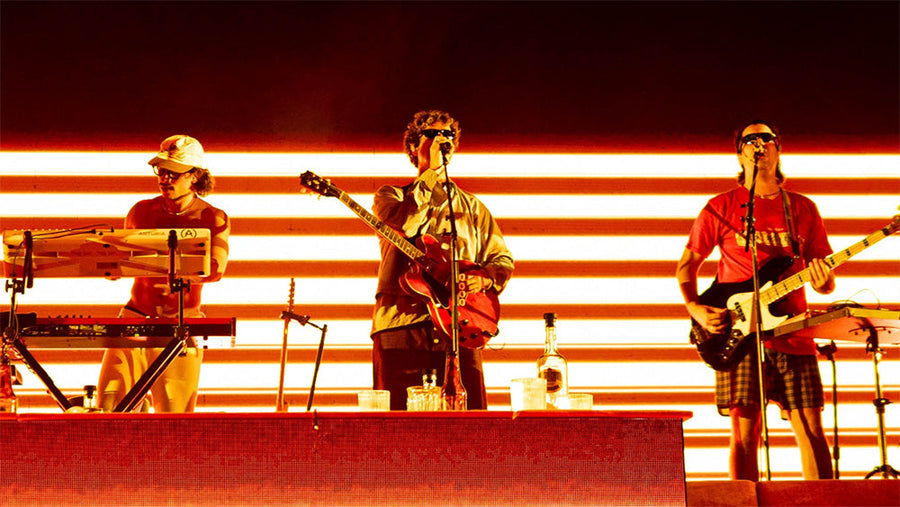
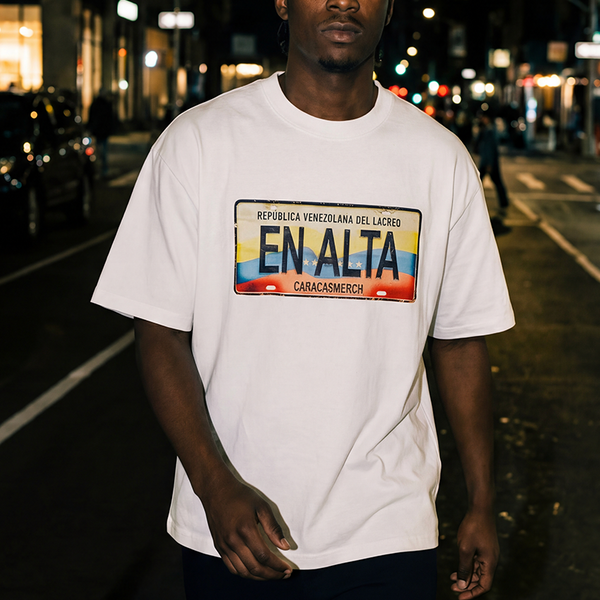
The best proof is who's wearing it. Rawayana, the Venezuelan band now playing to crowds across Latin America, has worn Caracas Merch on its "¿Dónde es el after?" tour. The brand's "EN ALTA" design showed up organically at Bad Bunny's first-ever shows in Brazil in February 2026, worn by Bysael Martínez Ocasio, the artist's brother.
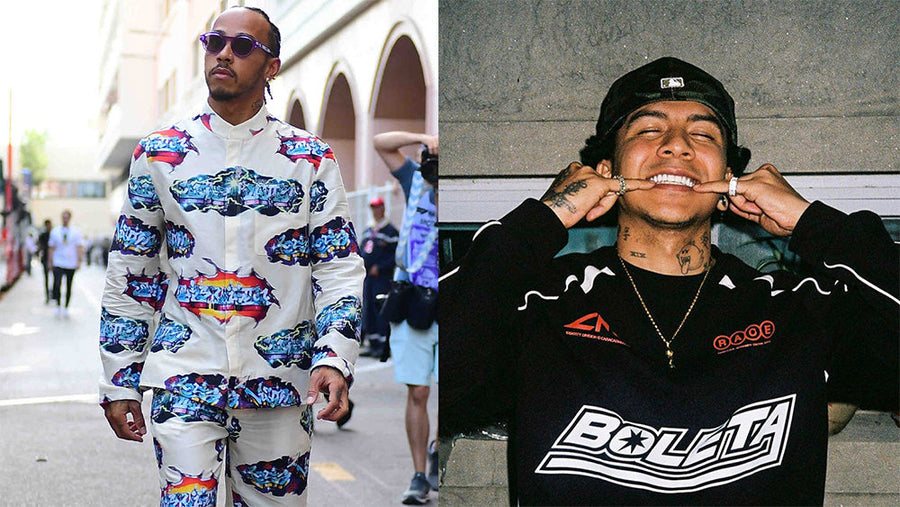
And the most recent sighting crossed every border: Young Dirty Bastard, son of the legendary Ol' Dirty Bastard, took the stage in Caracas Merch at a Wu-Tang Clan show. A Venezuelan band, Bad Bunny's inner circle and an heir to New York hip-hop royalty: three different worlds wearing the same brand. That's exactly the point. It's for people with Venezuela in their blood and for anyone who knows a good piece when they see one.

7. Nude Project
From: Spain, 2019 · Founders: Bruno Casanovas and Alex Benlloch · Official site
Nude Project pulled off something rare: building a global streetwear community out of Spain, without relying on the New York or Tokyo hype machine. Its founders were around 19 when they launched it.
The brand grew by documenting everything online, mostly on Instagram, TikTok and YouTube, where Bruno and Alex showed the unfiltered process of building a brand from zero. That transparency created a bond with their audience that no ad budget can buy. According to FashionUnited, it closed 2023 with €26 million in sales.
Its oversized hoodies, graphic tees and pants are recognizable for clean designs with a conceptual edge. Today it has stores in Madrid, Valencia, Barcelona and Milan, and sells worldwide without losing the closeness that got it here.

8. Eme Studios
From: Madrid, 2018 · Founder: Conra Martínez · Official site
Eme Studios is more proof that Spain has become a streetwear heavyweight. The Madrid label designs everything in-house and has dropped new pieces every two weeks since 2021, a pace that keeps its community constantly tuned in.
It made its name with knit sweaters and a warm, relaxed aesthetic that steps away from aggressive streetwear. Its flagship sits on Madrid's Calle Fuencarral, with more stores in Valencia and Barcelona, and it's already preparing its move into New York.
The growth is among the fastest in the industry: according to Modaes, it hit nearly €33 million in revenue in its latest fiscal year. Eme Studios represents a European streetwear scene that no longer needs America's approval.

9. Scuffers
From: Madrid, 2018 · Founders: Jaime Cruz Vega and Javier López Reinoso · Official site
Scuffers started as a project between two friends, ages 16 and 17, printing tees at a local workshop in Madrid. Today it's one of Europe's cult brands and, according to Modaes, it had already passed €25 million in revenue by 2022.
The look is easy to spot: oversized silhouettes, big graphics, earth tones and burgundy, with a mix of Mediterranean and urban style. Its motto, "As Always, With Love," says a lot about a brand that sells warmth before exclusivity.
It passed one million Instagram followers without leaning on paid ads, powered by limited drops and its "FF FAM" (Friends & Family) community. Where Supreme sells scarcity, Scuffers sells belonging.
oversized fits and earth tones" src="https://cdn.shopify.com/s/files/1/0607/2175/8382/files/scuffers-spain-streetwear-brand.jpg?v=1772685096">
10. Trikko
From: Murcia, Spain, 2018 · Founders: brothers Ibrahim and Moad Ghajjate El Fal · Official site
Trikko is a genderless streetwear brand created by two brothers with Moroccan roots. Its DNA comes from music: hip-hop, American trap and British street culture, mixed with the identity of kids who grew up between two cultures.
More than clothing, Trikko pushes a movement called "Game Changers," encouraging young people to chase their goals through hard work and sacrifice, and produces series like "Show Your Bars" featuring emerging and established artists. Its Atlas collection, inspired by Morocco, ties straight back to those roots.
Artists like Central Cee and Rauw Alejandro have worn its pieces. Trikko is a clear example of something Venezuelans understand well: diaspora streetwear, made by people who carry where they're from wherever they go.

Streetwear Trends for 2027: Where Street Fashion Is Headed
If 2026 was the year hype stopped being enough, 2027 looks set to lock that shift in. The brands on this list are already leading the way, and the signs of what's coming are clear.
Community beats advertising. Corteiz and Scuffers grew without depending on paid ads, and that model is about to become the norm. In 2027, brands without a real community behind them will find it harder and harder to compete, no matter how big their budget is.
Physical stores come back as gathering spots. Kith turned its stores into experiences, Nude Project is already in Milan and Eme Studios is heading to New York. By 2027, opening a store will be less about selling and more about bringing the community together in person.
Identity and diaspora streetwear keeps rising. Denim Tears, Trikko and Caracas Merch show that people want clothes that say where they come from, and that those clothes can win over people from anywhere. With millions of Latin Americans, Africans and Arabs living far from home, this looks like one of the fastest-growing segments.
New York is no longer the only center. London, Madrid, Valencia and Murcia are already competing head-to-head, and Latin America has everything it needs to be the next big scene. Less logomania, more quality and pieces built to last: that's the streetwear heading into 2027.
What the Best Streetwear Brands of 2026 Have in Common
Put them side by side and the pattern jumps out. Supreme and Kith defined the game from New York. Corteiz proved a loyal community is worth more than any campaign. Nude Project, Eme Studios and Scuffers turned Spain into a powerhouse. Denim Tears, Trikko and Caracas Merch prove that a people's identity and history can be worn, and worn by anyone.
None of these brands live off a logo alone. All of them build community, say something of their own and make clothes that mean more than a trend.
Streetwear in 2026 doesn't ask how exclusive you are anymore. It asks where you're from.
Streetwear Brands FAQ: What People Are Asking in 2026
What are the best streetwear brands in 2026?
The most relevant streetwear brands in 2026 include Supreme, Corteiz, Denim Tears, Kith and Aimé Leon Dore, alongside rising names like Nude Project, Eme Studios, Scuffers, Trikko and Caracas Merch. What they share isn't just hype: they all build real communities, tell their own stories and make clothes with a clear identity.
What is the most famous streetwear brand in the world?
Supreme is still the most recognized. It opened in 1994 as a skate shop on Lafayette Street in New York and popularized weekly drops and the Box Logo. Its industry weight is huge: VF Corporation bought it in 2020 for $2.1 billion, and EssilorLuxottica acquired it in 2024 for $1.5 billion.
Which Spanish streetwear brands are popular right now?
Spain is having its biggest streetwear moment yet. Nude Project, Eme Studios and Scuffers lead the wave, all launched between 2018 and 2019 and now pulling in tens of millions of euros a year. Trikko, from Murcia, adds a diaspora perspective with Moroccan roots. All of them grew through social media and fiercely loyal communities.
What is a drop in streetwear?
A drop is the release of a collection or single piece at a set date and time, usually in limited quantities. Supreme turned it into a weekly Thursday ritual, and brands like Corteiz and Eme Studios now use drops to build anticipation, lines and online buzz before everything sells out.
What will streetwear trends look like in 2027?
Four big trends stand out: strong communities over paid advertising, physical stores designed as gathering spots, the rise of identity and diaspora streetwear, and scenes like Spain and Latin America gaining ground on New York. Expect less logomania and more focus on quality and pieces that last.
Are there any Venezuelan streetwear brands?
Yes. With nearly 8 million Venezuelans living abroad, a new generation of brands is turning Venezuelan slang, music and identity into clothing. Venezuelan streetwear works as a bridge, letting the diaspora carry home with them in cities like Madrid, Miami, Bogotá or Santiago, while the design itself speaks to a much wider audience.
Can you wear Venezuelan streetwear if you're not Venezuelan?
Absolutely. Caracas Merch is built exactly for that: inspired by Venezuelan culture but made to global standards of quality and design. Artists from very different worlds have worn it, from Venezuelan band Rawayana to Young Dirty Bastard on stage with Wu-Tang Clan. You can find the collections at caracasmerch.com.
Ready to wear the culture? Explore the latest collections at Caracas Merch.