

What Does It Mean to Be Marginal? The Culture the World Could Not Ignore
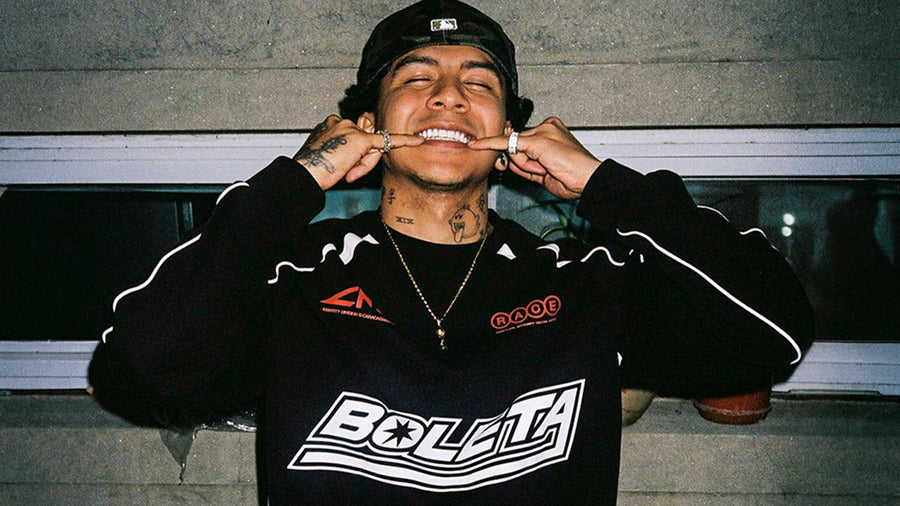
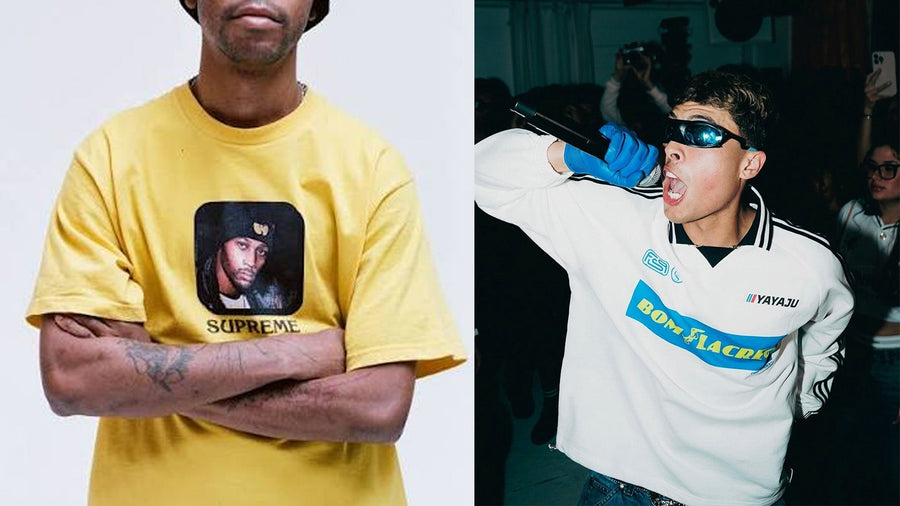
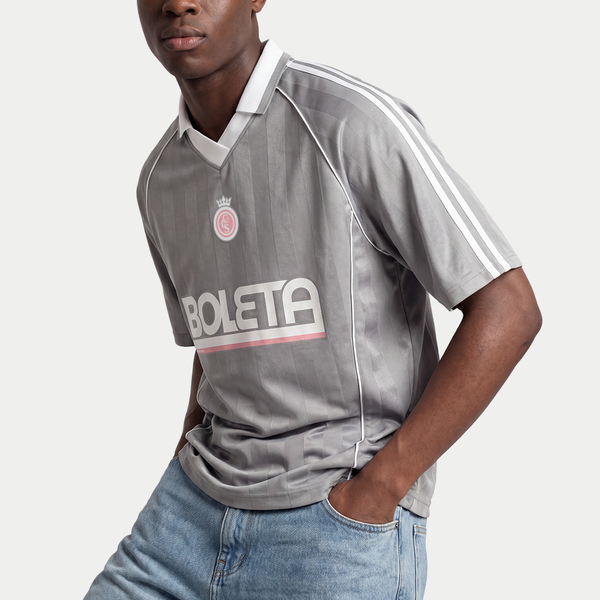
Cover - Left: Lewis Hamilton in Louis Vuitton, creative direction by Virgil Abloh, graphics by @ghustoleon, Venezuelan artist based in Milan. Right: Big Soto wearing the Boleta long sleeve by Caracas Merch.
First, the real definition
Marginal. From the Latin marginalis: situated at the margins. Outside the center. Not belonging to what the system considers the established order.
If someone ever called you marginal thinking it was an insult, we have news for you: they were right. Just not in the way they meant.
Marginal doesn't mean inferior. It doesn't mean dirty, dangerous, or worthless. Marginal means you're at the margins, and the margins, historically, are exactly where everything the world ends up wanting to copy is born.
The word comes from the Latin margo: edge, border. The margin of a book is the free space where readers wrote their most interesting ideas, their notes, their genuine thoughts. The official content went in the center, but the ideas that changed the conversation were written in the margins.
Society did exactly the same thing with people who didn't fit its center: it pushed them to the margins. And those people, far from giving up, built their own rules, their own language, their own aesthetic. They built culture.
The history of fashion, music, and art in the 20th and 21st century is the history of the margins conquering the center.

Everything the world consumes comes from the margins
Think about it for a second. Hip-hop was born in the Bronx in the 70s, at block parties where there was no money for sound equipment, DJs connected speakers directly to street lights. They stole electricity to make art. Today hip-hop is the most lucrative music industry on the planet.
Punk was born among unemployed British youth in the 70s, most of them from working-class neighborhoods with no access to instruments or music schools. They played what they could, how they could. Today punk aesthetic appears on the runways of the world's most luxurious fashion houses.
Skateboarding was considered vandalism for decades, something for delinquents, street culture. Today it's an Olympic sport with its own multibillion-dollar industry in clothing, footwear, and media.
Graffiti was grounds for arrest. Today the work of Jean-Michel Basquiat, who started painting walls in Manhattan under the alias SAMO, sells at Christie's for tens of millions of dollars.
The question isn't whether marginal culture has value. The question is why it takes us so long to recognize it.

The references that rewrote the rules from the margins
None of these names were born at the center. None of them started with inherited capital, industry connections, a European design education, or a family already inside the system. They started from exactly where many of you are standing right now. And that is precisely what makes them irreplaceable.
01. Corteiz (CRTZ) - London, Ladbroke Grove
Clint Ogbenna started Corteiz from his bedroom in North Kensington, one of London's most deprived boroughs, the same borough where Grenfell Tower stands, a symbol of institutional abandonment toward poor communities. No investors, no lookbooks, no showrooms. Access to the website was locked behind a password: only those who had it could buy. That wasn't a clever marketing strategy, it was the logic of the neighborhood translated to the internet. We know who we are. Outsiders have to earn their way in. Today Corteiz is the most sought-after brand in the UK. Nike called. Adidas called. And Clint set the terms.
02. Virgil Abloh - Chicago / Rockford, son of Ghanaian immigrants
Virgil Abloh grew up in Rockford, Illinois, the son of Ghanaian immigrants. His mother was a seamstress; his father painted houses. He didn't study fashion, he studied civil engineering and architecture. He was the absolute outsider in the world of European luxury. When he founded Off-White, the fashion establishment didn't know what to do with him. When Louis Vuitton named him Artistic Director of menswear, the first African American in that role at a major French maison, it was a declaration that the margins had arrived at the most central place in luxury. Virgil didn't change who he was to fit in. He changed what fitting in meant.
03. Pharrell Williams - Virginia Beach, public housing project
Pharrell Williams grew up in a public housing project in Virginia Beach. Musician, producer, designer, always unclassifiable, always at the margins of every category they tried to put him in. He founded Billionaire Boys Club and Ice Cream with an aesthetic that blended streetwear, art, and references from Black Southern American culture. When Louis Vuitton chose him as Virgil Abloh's successor, they didn't choose a conventional fashion designer. They chose someone whose vision always came from the outside. They chose the margin.
04. Denim Tears - South Carolina / New York, Black Southern American history
Tremaine Emory founded Denim Tears to do exactly what the fashion industry didn't want to do: speak without filters about the history of slavery, transgenerational trauma, and Black identity in the United States. His garments with cotton motifs aren't decorative, they're a political act. A provocation. Wearing Denim Tears means knowing the history you're carrying on your back. No major brand would have launched that from the top down. Only someone who comes from the margins has the courage and the need to say it.
05. Aimé Leon Dore - Queens, New York, son of Greek and Caribbean immigrants
Teddy Santis founded ALD from Queens, not from Manhattan, not from SoHo, not from any of the centers the fashion industry considers legitimate. ALD is the perfect synthesis of the immigrant experience in New York: the dignity of work, the pride of ancestry, the aesthetic of the blacktop and the neighborhood café. When New Balance chose them as a creative partner, it was because Teddy understood something the big brands had forgotten: authenticity can't be bought, it can only be lived.
06. Supreme - Lower East Side, New York
James Jebbia opened Supreme in 1994 on Lafayette Street in the Lower East Side of Manhattan, when that neighborhood wasn't cool, it was cheap, it was the street, it was where skaters gathered because they had nowhere else to go. The store was designed so skaters could roll in on their boards, with the counter off to the side so it wouldn't interrupt the flow. It wasn't a store designed to sell fashion. It was a gathering place for people the mainstream didn't want. Today Supreme is valued at over two billion dollars. The same establishment that ignored skate culture now collects box logos.
07. A Bathing Ape (BAPE) - Ura-Harajuku, Tokyo
Nigo founded BAPE in 1993 from Ura-Harajuku, the "back Harajuku," the secondary alleyways where young Japanese people who didn't fit into corporate culture built their own visual universe. Japan in the 90s was a society that pushed toward uniformity. BAPE was the opposite: impossible prints, camouflage in colors that don't exist in nature, references mixed without apology. What Nigo built from those alleyways became a mandatory reference for all of global streetwear. Pharrell was wearing BAPE before any Westerner knew how to pronounce the name.
08. Stüssy - Laguna Beach, California, the beach that wasn't cool
Shawn Stussy started in the 80s shaping surfboards in Laguna Beach and signing them with the same signature he later screened onto T-shirts. He sold them on the beach, hand to hand, with no distributor and no store. The signature that started as a brand for a marginal California surfer became the foundation of the global streetwear visual language, the typography, the attitude, the concept of a brand that exists for its community before it exists for the market. It all started with a handmade surfboard.
09. Fear of God - Los Angeles, son of Italian and African American immigrants
Jerry Lorenzo founded Fear of God with no fashion design training, no institutional investment, from Los Angeles, not New York, not Paris, the only two centers the industry recognized as legitimate. What Jerry built was a blend of Black church clothing, American workwear, and references to hardcore and gospel. It was too religious for streetwear and too street for the church, exactly at the margin between two worlds. Today Fear of God dresses the best athletes and musicians in the world, and Adidas chose him to redefine their basketball line. From the margin between two cultures came something neither one of them could have produced alone.
10. Willy Chavarría - Fresno, California, son of Mexican farmworkers
Willy Chavarría grew up in Fresno, the son of Mexican migrant farmworkers in California. He taught himself fashion and built a career no one in the establishment would have predicted for someone with his background. His work at American Eagle as Creative Director transformed a mass retail chain into a platform for Latino, working-class, and queer identity, things the fashion mainstream had systematically ignored. Today Chavarría has his own line that blends the elegance of tailoring with Chicano workwear, and he was named Womenswear Designer of the Year by the CFDA. He came from the fields of Fresno. He arrived at the most central place in American fashion.

Caracas Merch and its mark on global culture
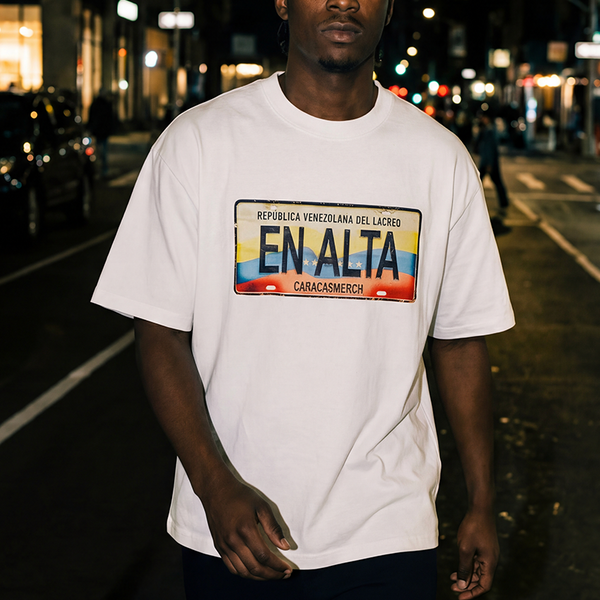
No media campaign. No paid advertising. No PR agency sending press releases to fashion editors. Everything Caracas Merch has built until now arrived the only way real things spread: word of mouth, chest to chest, one person who gets it passing it to another person who gets it.
Today Caracas Merch has reached more than 20 countries. Not all of them were predictable. There are orders from cities across Europe, North America, Latin America, the Venezuelan diaspora scattered across the world looking for something that reminds them of who they are. But the order that impressed us most didn't come from any of those obvious places. It came from Vietnam. A country with no direct connection to Venezuela, no significant Venezuelan community, no logical reason for anyone there to know Caracas Merch existed. And yet there was the order. That's what happens when something is genuinely cultural and not just geographic, it finds people who understand it even if they don't know exactly why.
In the music circuit, the brand started showing up where it matters. Bysael Martínez wore it at a Bad Bunny concert, one of the most-watched stages in Latin entertainment right now. Rawayana, one of the most important Venezuelan bands of their generation, wore it on their tour as part of the after-party. These weren't paid placements. They were people who wear the brand because it means something to them, because they feel it's theirs.
The only external collaboration the brand has done so far was with Soucream, a Venezuelan funk artist doing exactly the same work as Caracas Merch but through music: bringing Venezuelan culture to spaces where no one expected it. Soucream has shared stages with Gordo, one of the most influential DJs in the world right now. Two Venezuelan projects, marginal by origin, building something the mainstream didn't ask for but can't ignore.
And behind all of this is the Caracas No Es Loca community, over 800,000 people who understand the joke, who understand the pride, who understand why this matters. That community isn't a marketing channel. It's proof that there's an entire world of people who were waiting for someone to do this. Caracas Merch didn't create that identity. It documented it. It gave it a form you can wear.
No media outlet has written about us yet. That says something too. The brands that end up becoming cultural references almost never start with coverage, they start with a community that carries them before the world discovers them. That's how Corteiz started. That's how Palace started. That's how everything real begins.
The world is still discovering what the community already knows.

Why they use it as an insult
Understanding why "marginal" is used as a put-down requires understanding how power works. Cultural and economic elites have always needed two things to maintain their position: first, to convince you that their culture is the only legitimate one; second, to convince you that yours isn't.
It's no accident that words associated with the culture of the margins always carry negative connotations before that culture goes mainstream. "Ghetto" is now an aesthetic aspiration. "Ratchet" was reclaimed. "Barrio" in many English-language contexts went from something whispered to something celebrated. The pattern is always the same: first they dismiss it, then they consume it, then they pretend they always valued it.
When someone calls you marginal as an insult, what they're really saying is that you don't belong in their center. And they're right. You don't belong there. You belong in the place where the things they'll be celebrating in ten years are being created right now.
Every time someone at the "center" uses "marginal" as an insult, they're openly admitting that the margins threaten them.
The discomfort that marginal culture produces is exactly that: it's genuine. It wasn't designed in a corporate creative meeting. It has no focus groups. It wasn't tested to maximize sales. It is what it is because whoever created it had no choice but to be authentic, because they didn't have the resources to build a mask. And that authenticity, in a world saturated with corporate content, is exactly what people are desperately searching for.

The cycle that always repeats
Sociology has a name for this process. It works like this, without exception, for over a century:
Creation from necessity. Communities at the margins create culture because they need it, not to export it, not to monetize it, but because they need their own language, their own identity. Jazz was born that way. So was blues. Reggae. Salsa. Trap. Cumbia villera. All of them started as local responses to local realities.
The establishment's contempt. The establishment first ignores, then looks down on it. Jazz critics in the 1920s called it "Black music." Hip-hop was classified as "noise" and "not music" for years by the mainstream press. Every form of marginal culture goes through a phase of institutional rejection.
Selective adoption. Then come the early adopters from the center, usually young people who sense that this culture has something theirs doesn't: truth, urgency, energy.
Commercialization. Corporations smell the opportunity. Sometimes with the original creators inside, as happened with Virgil at Louis Vuitton. Sometimes without them, appropriated, whitewashed, reduced to aesthetic without context.
The return to the roots. The corporate version saturates the market. People look for authenticity again. And they find, exactly, the communities that never stopped creating from the margins. Those with real roots always win.
 Venezuela and Latin American marginality
Venezuela is one of the most misunderstood countries in the world. The global narrative reduced it for decades to its violence statistics, its political crisis, its collapsed economy. But those who know it, who lived it, who carry it tattooed on them even from the other side of the planet, know that Venezuela has something few countries have: an irreducible cultural identity that survived everything thrown at it.
Venezuela gave the world joropo and gaita, hallaca and pabellón, a way of speaking that resembles no other Spanish on the continent, a sharp dark humor that only makes sense if you lived it. It gave the world a generation of migrants who arrived in Miami, Bogotá, Madrid, Santiago, and Quito with nothing, and built lives, businesses, communities, and culture from scratch. That isn't defeat. That is exactly the same story told by hip-hop in the Bronx, punk in Birmingham, skate in the Lower East Side.
The Venezuelan who emigrated with a suitcase and rebuilt their life in another country is doing the same thing Kerby Jean-Raymond's parents did when they arrived from Haiti to Queens. The same thing Virgil's parents did when they arrived from Ghana to Illinois. Marginality isn't a Venezuelan condition, it's a human condition that produces culture when people refuse to disappear.
We are not marginal because we lack something. We are marginal because we have what the center has too much of: authenticity forced by circumstance.
Caracas Merch exists to document that. To tell whoever wears it that what we are, where we come from, is not something to hide. It is exactly the origin of everything the world ends up admiring.
What it means to be marginal today
In a world where any corporation can hire creatives to appear authentic, real authenticity, the kind born from necessity, from the neighborhood, from lived history, is the scarcest and most valuable asset in existence.
The most challenging brands of this moment don't come from luxury conglomerates. They come from people with something genuine to say, with a real community behind them, with a story that can't be manufactured. Corteiz couldn't exist if Clint were from Kensington Palace, it would just be another pretty brand. It exists because it comes from where it comes from.
Denim Tears couldn't say what it says from a boardroom in Paris. It says it because Tremaine Emory carries the history in his body.
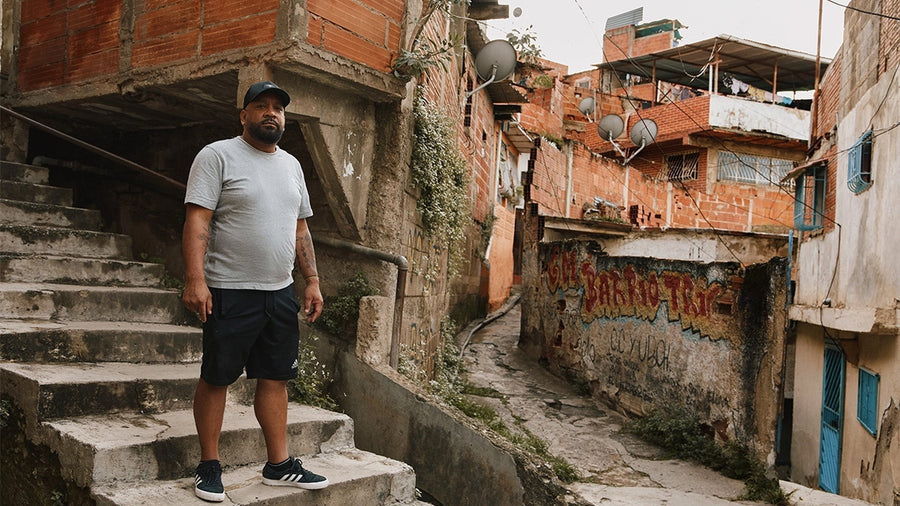
Caracas Merch couldn't be what it is if it were designed by someone who never understood what it means to look at the city from the hillside, to hear that mix of music coming out of every window, to feel that complicated pride and that nostalgia that runs through everyone who carries it inside.
The margin is the origin. And the origin is the one thing that can't be bought.
While you read this, here's what's happening from the margins:
- Rawayana, a Caracas band founded in 2007, just entered the top 10 of the world's highest-grossing tours according to Pollstar. Their ¿Dónde es el After? tour landed at number 8 on the Live75 ranking, selling an average of 15,112 tickets per show and grossing nearly one million dollars per date, surpassing Bruce Springsteen, No Doubt, and Peso Pluma. All of that with a lead vocalist who spent weeks going in and out of consulates asking for visas just to be able to perform. From Caracas to the global top 10.
- Corteiz was valued at millions of dollars. A brand that started in a bedroom in North Kensington with a password on the website. No investors. No institutional backing. Just real community.
- Bad Bunny turned reggaetón into the most listened-to genre on the planet after decades of the industry calling it street music, music for delinquents, music with no future. Today he is the most-streamed artist in the world for several consecutive years and fills stadiums on every continent. The same genre they tried to silence became the musical language of an entire generation.
- The global streetwear market surpassed 185 billion dollars. An industry that was literally born in the streets, from skate, from hip-hop, from the neighborhoods, and that fashion experts for decades didn't consider "serious" fashion. Today it's the economic force driving Nike and Adidas, and forcing Louis Vuitton to seek out Virgil and Pharrell.
- Karol G, a Colombian woman from Medellín, sold out the Estadio Azteca two consecutive nights the largest stadium in Latin America, with music that comes from exactly the same place as reggaetón: from the margins of a Latin American city that no one in the industry took seriously.
- Supreme was acquired by VF Corporation for 1.3 billion dollars. A skate shop from the Lower East Side that wouldn't let suited people in. The establishment ended up buying what it first ignored.
- Tyler, the Creator won the Grammy for Best Rap Album with a record where he speaks openly about growing up as an outsider, about not fitting in, about building from the margins of Black American culture. In his acceptance speech he said the "rap" category was a way of segregating Black artists. He said it at the most central ceremony in the music industry. From the inside.
- Cumbia, vallenato, afrobeat, amapiano genres born in rural, poor communities ignored by the industry, now appear in the sets of the world's most in-demand DJs and in Spotify's editorial playlists with millions of streams. The culture of the margins doesn't need permission to go global. It just needs time.
- Rosalía took flamenco, the music of Spain's Romani community, historically discriminated against and marginalized, and brought it to the Latin Grammys, to collaborations with J Balvin and Billie Eilish, and to the covers of the most important fashion magazines in the world. Without abandoning where she came from. Without softening the origin. Exactly the opposite: making it more visible.

The next time someone calls you "marginal"
Remember this:
Clint didn't ask permission to create Corteiz. Virgil didn't wait for the fashion world to invite him in. Pharrell didn't change his vision to fit in, Louis Vuitton changed its vision of what it wanted to be. Tremaine Emory didn't soften the message to make it more palatable. Teddy Santis didn't move to Manhattan to make his brand seem more legitimate. Jerry Lorenzo built from the space between two worlds that neither one of them claimed. Willy Chavarría went from the fields of Fresno to the center of American fashion without changing who he was.
All of them were marginal. All of them knew it. And all of them used exactly that position to build something the center couldn't replicate no matter how hard it tried.
Caracas Merch is marginal. And that, exactly that, is our greatest advantage.
We are no one's copy. We are not the Latin American version of something European or North American. We are the original. We are the source. And when the world finally pays attention, and it will, because it always does, they'll say they'd been following us from the beginning.
Until then, we keep building. From the margins. Like always.
Marginal is not what you are. It's where you come from. And where you come from is where everything that matters was born.