

The Venezuelan artists you can't ignore in 2026
There's a fact that most people haven't connected yet: in May 2026, a tropical rock band from Caracas hit number one on Billboard. Not in some niche category. On Latin Airplay, the chart that measures what's actually playing on Latin radio across the United States. And it wasn't a fluke.
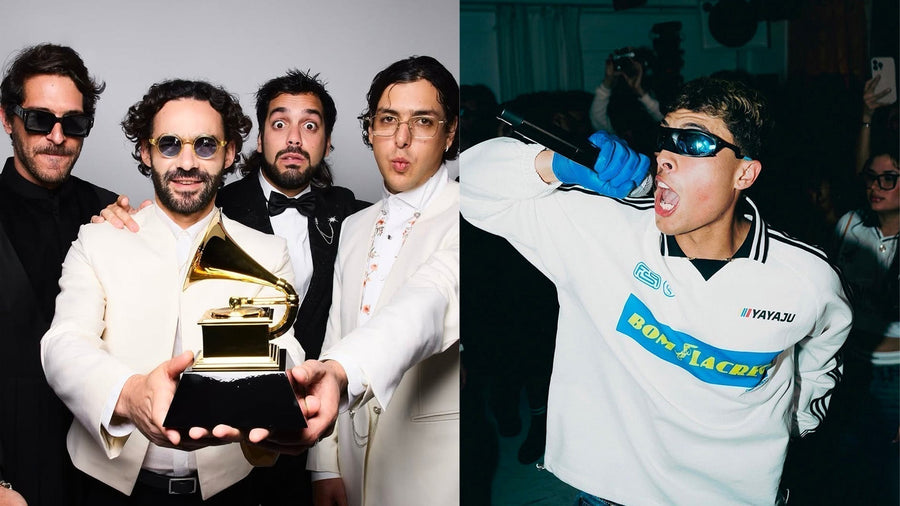
Danny Ocean. Rawayana. Elena Rose. Three artists. Three completely different sounds. One common origin: Venezuela. And in the first half of 2026, all three have done something that would have seemed unlikely five years ago, turned their culture into the most compelling musical proposition coming out of Latin America.
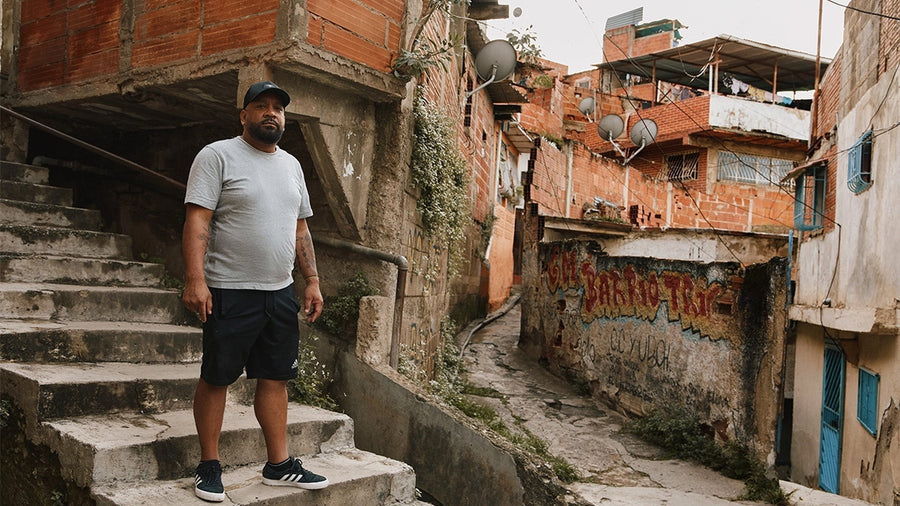
This isn't a highlight reel. It's an attempt to understand what's actually happening, and why Venezuela, a country that has lived through one of the deepest crises in its modern history, is producing some of the most original artists on the planet right now.
Why 2026 Is Venezuela's Year in Global Music
To understand the current moment, you need some context.
Over the past decade, Venezuela experienced one of the largest emigration waves in Latin American history. More than seven million people left, doctors, engineers, teachers, musicians. An entire generation scattered across the globe.
What nobody accounted for is that the diaspora didn't dissolve. It reorganized.
Venezuelan artists who grew up between Caracas and Miami, between Caracas and Madrid, between Caracas and Mexico City absorbed two worlds simultaneously. They came up listening to salsa and reggaeton, but also Anglo indie rock, Brazilian funk, and Afrobeats. When they started making their own music, they didn't choose between those influences. They layered them all.
The result is what you hear in 2026: a Venezuelan sound that doesn't sound like anything else. Tropical but urban. Melancholic but danceable. Deeply rooted and completely global at the same time.
The music industry took a while to catch on. Audiences didn't.

Danny Ocean and the Album That Broke the Internet
When Carlos Daniel Reyes Moreno, known professionally as Danny Ocean, released Babylon Club through Atlantic/Warner Music Latina, he didn't pitch it as a statement album. He described it as a record about moments. About not overthinking things.
What followed was anything but small.
Babylon Club crossed one billion streams on Spotify. His single "Corazón" hit number one on both Billboard's Latin Airplay and Latin Pop Airplay charts. The Venezuelan artist sold out an entire European tour before January was even over. In Madrid, he brought palm trees onstage in the middle of winter, and the crowd sang every word back to him.
What sets Danny Ocean apart isn't just the sound, though that impeccably produced tropical pop is genuinely hard to compete with, it's the story he wraps around it. His songs deal with love and loss, sure, but also with what it means to carry your country inside you while living somewhere else entirely. That tension, that nostalgia that refuses to become defeat, is what connects with millions of Venezuelans in the diaspora. And increasingly, with audiences who have never set foot in Venezuela but recognize the feeling immediately.
With 28 million monthly listeners on Spotify, Danny Ocean isn't just the most-streamed Venezuelan artist in the world. He's proof that there's a massive market for music that refuses to be simple.

Elena Rose: The Voice Venezuela Sent to the World
If Danny Ocean represents tropical pop and Rawayana stands for alternative rock, Elena Rose is the artist who proved Venezuela could dominate mainstream Spanish-language pop on its own terms.
At the 2026 Premio Lo Nuestro ceremony, held February 19 in Miami, the Caracas-born singer arrived with six nominations, more than any other Venezuelan artist in the award show's history. She won La Mezcla Perfecta del Año ("Best Blend of the Year") for "Carteras Chinas," her collaboration with Camilo and Los Ángeles Azules. The track crossed genres, crossed generations, and crossed borders with the kind of ease that makes everything look effortless.
It isn't.
What Elena Rose has is rare: a voice that convinces and a natural ability to inhabit different genres, pop, Afrobeats, ballad, without ever losing her own sound. Her 2026 collaborations include María Becerra, Morat, and Justin Quiles. She sounds different on each one. She sounds like herself on all of them.
Her album En Las Nubes (Con Mis Panas) earned a nomination for Album of the Year at Lo Nuestro. That kind of recognition doesn't come from a lucky single. It comes from consistency.

Rawayana: How a Band from Caracas Hit Number One on Billboard
Of the three, Rawayana's story might be the most unlikely.
They're not a boyband. They don't make reggaeton. They didn't follow any conventional playbook for breaking into the Latin music market. They're a tropical rock band that has spent years moving between genres, reggae, funk, electronic, pop, tropical, with an identity so specific it's almost impossible to categorize.
In 2026, that turned out to be their greatest advantage.
"Inglés en Miami," their collaboration with Manuel Turizo off the album ¿Dónde Es El After?, spent ten weeks in the top 10 of Billboard's Latin Rhythm Airplay chart before landing at number one on May 16. It then repeated on the overall Latin Airplay chart dated May 23, becoming Turizo's tenth chart-topper and Rawayana's first, ever.
"Having our first No. 1 on a Billboard chart means a lot to us," lead vocalist Beto Montenegro told Billboard. "We've spent years building our sound from Venezuela to the world, always trusting our instincts and our culture." That quote is worth more than any market analysis.
The song is about a girl navigating life between Venezuela and Miami, two languages, two worlds, two versions of the same person. In three and a half minutes, it captures the Venezuelan experience in 2026 better than most documentaries have in an hour. And the world got it immediately.
Rawayana now has a world tour taking them through the US, Canada, and Europe. A band that started playing shows in Caracas is selling out venues in the northern hemisphere. The circle closes.

What These Three Artists Actually Have in Common
Three sounds. Three trajectories. But look at them together and a pattern emerges that's hard to ignore.
All three grew up in Venezuela. All three left. All three built their careers from the diaspora, Miami, primarily, but also Madrid, Mexico City, wherever there was internet and a recording studio. And all three, instead of hiding their origins or diluting them to sound "more global," made their identity the product.
Danny Ocean carries palm trees into European venues and reminds anyone who'll listen where he's from. Rawayana writes songs about moving between two languages and two countries. Elena Rose collaborates with everyone but always returns to being, simply, a girl from Caracas with an extraordinary voice.
This isn't coincidence. It's a generation that figured out something the industry is still learning: specificity is universal. The more honest you are about your particular story, the more people around the world recognize themselves in it.
There's also a collaborative thread running through all of this. The album Radio Venezuela brings together Danny Ocean, Rawayana, Elena Rose, Mau y Ricky, Joaquina, Lasso, Akapellah, and more, a cross-section of the Venezuelan diaspora making music together as a statement of identity. It's not just a record. It's a flag.
How the Venezuelan Diaspora Became a Cultural Engine
There's a reason the Venezuelan moment is happening now, in 2026, and not a decade ago.
The diaspora needed time to mature. To process the displacement, find its voice, build networks, accumulate the kind of lived experience that gives art its weight. The Venezuelan artists making waves today have been working for years. They're not overnight sensations. They're the result of a generation that used distance as perspective.
There's something else worth noting: the Venezuelan diaspora is, culturally speaking, extraordinarily diverse. Venezuela has always been a country of layers, European, African, Indigenous, Caribbean, and that diversity traveled with its emigrants. Venezuelan artists don't have one sound because Venezuela never had one culture. They have many sounds, all recognizable, all distinct.
That's what makes this moment so hard to replicate and so easy to recognize. When you hear Danny Ocean, Rawayana, or Elena Rose, you know there's something behind the music that didn't come from an algorithm or a market formula. It comes from a real place, even if that place now exists more in the chest than on a map.
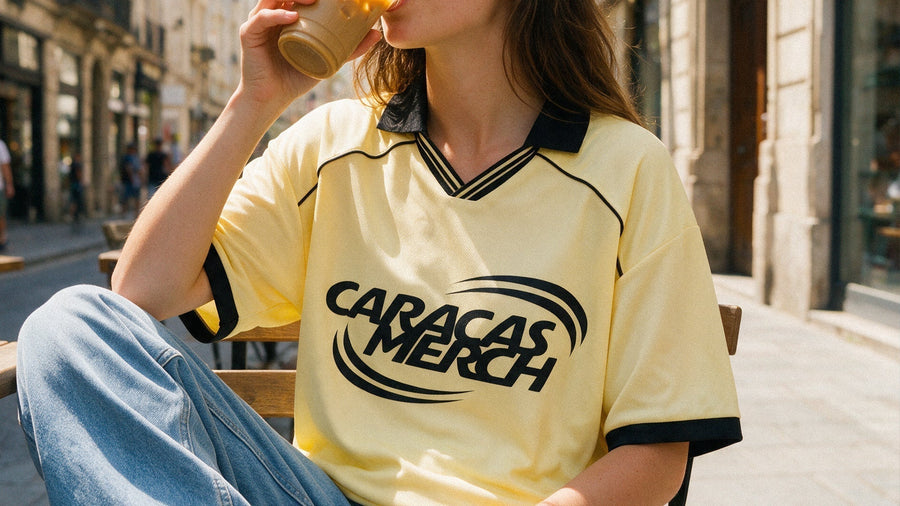
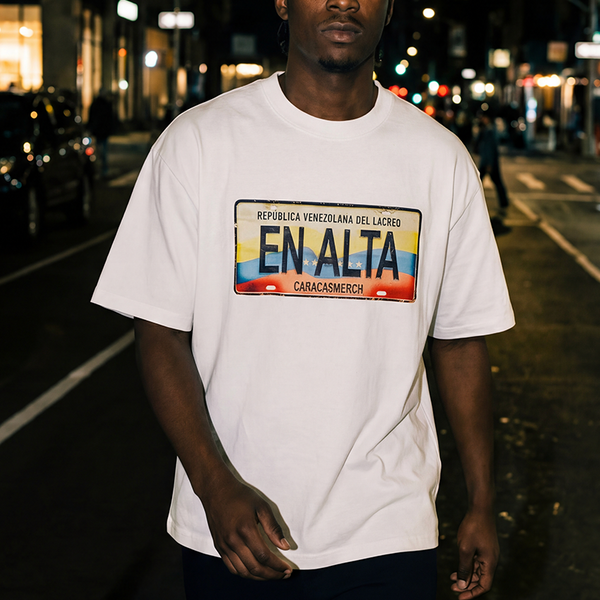
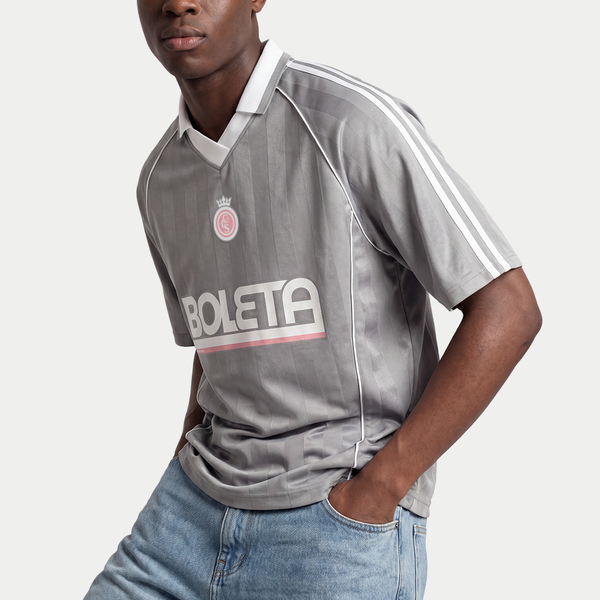
Brands like Caracas Merch have been betting on exactly that idea for years: Venezuelan identity as something you wear with pride, something you take with you wherever you go. The musical moment of 2026 isn't separate from that bet. It's the same story told through a different medium.
Where Venezuelan Sound Goes From Here
The interesting thing about cultural movements is that by the time you can see them clearly, they're already in the next phase.
Rawayana's world tour pushes well beyond traditional Latin markets. Danny Ocean keeps building his European base. Elena Rose is assembling a catalog of collaborations that positions her as one of the most versatile voices in Spanish-language pop. And underneath all three, there's a younger generation of Venezuelan artists watching and taking notes.
Venezuelan sound isn't going to stay still. It's going to keep blending, absorbing, evolving, because that's what it's always done. The question isn't whether there will be a next Danny Ocean or a next Elena Rose. The question is what sound that person will invent, and from which city in the world they'll make it.
What's clear right now is this: Venezuela is on the global music map in a way that has no real precedent. And the people who always knew it, the ones who never needed anyone else to confirm it, can say, without arrogance, that they saw it coming.
FAQ
Who are the biggest Venezuelan artists right now in 2026? Danny Ocean, Rawayana, and Elena Rose are the three leading names. Danny Ocean crossed one billion Spotify streams with Babylon Club; Rawayana scored their first Billboard Latin Airplay number one with "Inglés en Miami"; and Elena Rose reached Premio Lo Nuestro with six nominations and a win.
Why is Venezuelan music having such a big moment right now? The Venezuelan diaspora created a generation of artists who grew up between two worlds, absorbing multiple musical influences without losing their cultural core. Combined with years of independent work from cities like Miami and Madrid, that formula is delivering results in 2026 that the industry wasn't ready for.
What is "Inglés en Miami" and why does it matter? It's Rawayana's collaboration with Manuel Turizo that hit number one on Billboard's Latin Airplay chart in May 2026, the band's first chart-topper ever. The song is about the experience of living between Venezuela and Miami, and it resonates with millions of people navigating life between two cultures.
What awards did Elena Rose win at Premio Lo Nuestro 2026? Elena Rose won Best Blend of the Year (La Mezcla Perfecta del Año) for "Carteras Chinas," her collaboration with Camilo and Los Ángeles Azules. She entered the ceremony with six nominations, a record for a Venezuelan artist at Lo Nuestro.
Are there other Venezuelan artists worth knowing beyond these three? Absolutely. The broader scene includes Mau y Ricky, Joaquina, Lasso, Akapellah, and a wave of emerging names who are building careers from the diaspora with the same blueprint: authentic identity, world-class production, and a real story behind the music.
Where can I find clothing that represents Venezuelan culture? That's exactly what Caracas Merch was built for, streetwear rooted in Venezuelan identity, made for people who carry Caracas with them no matter where in the world they're living.