

Dressing With Identity: The New Rules of Streetwear
Somewhere between the tenth Supreme drop that sold out in thirty seconds and the fourth "limited edition" collab that everyone had forgotten about by Tuesday, something broke.
Not in fashion. In the people buying it.
The consumer who spent $400 on a hoodie because a bot didn't get there first, who stood in line for sneakers they'd never actually wear, who bought the piece because the algorithm said it was hot, that person got tired. And when they got tired, they got smart. And when they got smart, they stopped buying the story and started asking: what does this actually say about me?
That question, simple, honest, unavoidable, is what's driving fashion in 2026. Not trend cycles. Not celebrity endorsements. Not artificial scarcity. Identity. The clothes you wear as an answer to who you are, not a rental of who someone else told you to be.
How Hype Culture Burned Itself Out
To understand where we are, you need to understand what broke.
Hype culture, the system of limited drops, resale markets, and manufactured exclusivity that dominated streetwear for the better part of a decade, wasn't just a business model. It was a psychological loop. Brands manufactured desire by restricting access. The harder something was to get, the more people wanted it. The more people wanted it, the more others wanted it too. Supply stayed intentionally low. Demand stayed artificially high. And for a while, it worked.
Then the cracks appeared.
The resale market became a parody of itself, with items flipping for multiples of retail before anyone had even worn them. Collaborations between brands that had no business being in the same room multiplied until they meant nothing. Every brand had a "drop." Every drop was "limited." Every limited drop was, somehow, everywhere.
The consumer who had been the engine of this machine started to notice something: they weren't buying clothes. They were buying access to a feeling that evaporated the moment the next drop was announced.
By 2025, the machinery had started to stall. By 2026, it's clearly over. What's replaced it isn't a new version of the same game. It's a fundamentally different one.

What "Dressing With Identity" Actually Means
This phrase gets thrown around a lot, so let's be precise about what it actually means, and what it doesn't.
Dressing with identity doesn't mean wearing your flag on your sleeve, literally or figuratively. It doesn't mean every outfit needs to be a political statement. It doesn't mean you can only buy from brands that share every one of your values, or that fashion has to be heavy and serious to count.
What it means is simpler: the things you wear come from somewhere real, and so do you, and those two things have something to say to each other.
It means buying a piece because it connects to a culture, a memory, a city, a sound, a feeling, not because it was algorithmically pushed at you seventeen times until you caved. It means knowing why you own what you own. It means your wardrobe, taken as a whole, tells a story that is specifically yours and not a copy of someone else's highlight reel.
That's it. Not complicated. But also not easy, in a world designed to sell you someone else's identity at scale.
The streetwear consumer in 2026, according to every major trend analysis, is more informed, more selective, and more resistant to hype mechanics than at any previous point in the culture's history. They research before they buy. They build wardrobes instead of accumulating pieces. They think about cost-per-wear, not retail price. And they have a finely tuned radar for anything that feels fake.

Why Gen Z Killed the Hype Cycle and What They Replaced It With
Gen Z didn't set out to kill hype culture. They just didn't need it.
This is the first generation that grew up fully inside the internet, which means they're also the first generation that learned, very early, to see through it. They watched brands perform authenticity. They saw the gap between what a company said and what it did. They fact-checked brand claims on social media before the campaign was even over. They know the difference between a brand that built a community and one that hired a community manager to simulate one.
The result is a consumer who is nearly immune to the mechanics that made hype culture work.
Repeat purchase rates for brands Gen Z perceives as genuinely authentic are 2.4 times higher than for brands that are merely popular. That number, 2.4x, is one of the most important statistics in fashion right now. It means that being real isn't just a nice-to-have. It's a competitive advantage. Maybe the only one that can't be easily copied.
What Gen Z replaced hype with is something harder to manufacture: meaning. They want brands that have a point of view, not just an aesthetic. They want pieces that connect to something real, a subculture, a movement, a place, a history. They want to feel like they found something, not like something found them first through a targeted ad.
Their annual fashion spending is estimated at $360 billion in 2026. They are not a niche. They are the market.

The Brands Winning in 2026 All Have One Thing in Common
Look at the brands gaining real traction in 2026, not the ones buying placements, not the ones with the biggest ad budgets, but the ones with actual cultural momentum, and they all share one characteristic.
They came from somewhere.
Not in the sense of a founding story on an About page. In the sense that the clothes carry a real context that existed before the brand tried to sell it. The brand didn't create the culture. The culture already existed, and the brand found a way to make it wearable.
This is the fundamental shift. For most of the hype era, brands tried to manufacture culture from scratch: hire the right people, create the right imagery, simulate the right references, and hope the algorithm did the rest. A few pulled it off. Most produced things that looked like culture but felt hollow the moment you actually wore them.
The brands landing differently right now are doing the opposite. They start with a real community, a real story, a real aesthetic that already lives somewhere in the world. The clothes are the artifact, not the origin.
It's not a coincidence that independent brands with deep local roots are consistently outperforming legacy players in cultural relevance metrics right now. The advantage that money and distribution used to provide, reach, has been partially democratized by social media. What can't be bought is legitimacy. And legitimacy comes from being from somewhere real.

What Identity-Driven Fashion Looks Like in Practice
Theory is useful. But what does this actually look like when you open your closet?
It looks like owning fewer things that mean more. The move away from volume, the twenty graphic tees you bought on impulse over two years, toward a smaller set of pieces you actually reach for, each with a reason behind it.
It looks like knowing the story. Where was this made? Who made it? What does the graphic reference? What community does this brand actually come from? These aren't gatekeeping questions. They're the difference between a wardrobe and a collection of stuff.
It looks like wearing things that would make sense at multiple points in your life, the concert, the airport, the dinner, the day after, not pieces engineered specifically for an Instagram moment that ages out in six weeks.
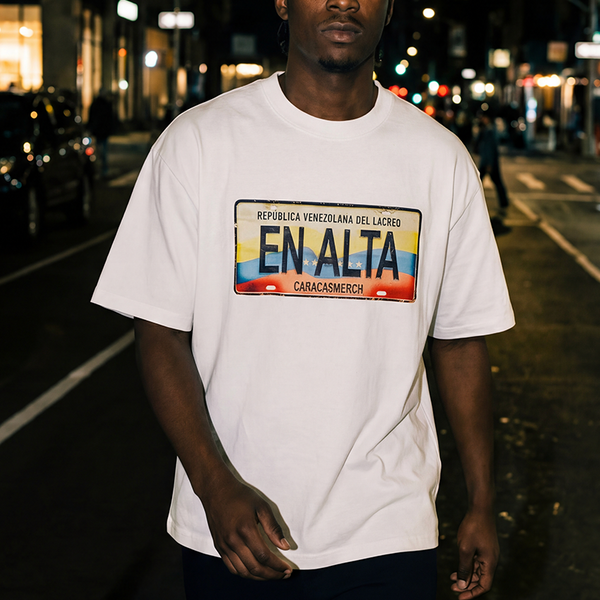
And practically, it looks like graphic tees and streetwear pieces that are culturally legible. A tee that references something real, a phrase from a specific city, an icon from a specific scene, a visual language that belongs to a real community, reads differently than one that was designed to look like it references something real. The difference is visible. People feel it even when they can't articulate why.

Where Latin and Venezuelan Streetwear Fits Into All of This
There's a reason Latin streetwear, and Venezuelan streetwear specifically, is having a cultural moment that extends well beyond its geography.
It's not because it's fashionable to be from Latin America right now, though the global visibility of Latin music, art, and culture in 2026 certainly doesn't hurt. It's because the brands coming out of this context have exactly what the post-hype market is looking for: a real origin, a specific community, and a visual language that didn't come from a mood board.
Venezuelan culture, in particular, has a specificity that's impossible to fake. The slang, the humor, the references, the visual codes, these things exist in a community that has lived something particular. When a brand translates that into clothes, the authenticity isn't a marketing strategy. It's just what it is.
This is what Caracas Merch has built, piece by piece: a brand where the clothes are artifacts of an actual culture, worn by people who are part of it and recognized immediately by others who are too. In a market exhausted by brands that sell belonging without earning it, that's not a small thing. That's the whole game.
How to Build a Wardrobe That Actually Means Something
If you're rethinking how you buy clothes in 2026, here's a practical framework, not rules, just questions worth asking before you add something to your cart.
Does this connect to something I actually care about? Not "is this on trend", that's the old question. Does this piece reference something, a city, a scene, a sound, a story, that genuinely means something to you?
Will I still want this in two years? Hype-driven pieces have a half-life. Culturally rooted pieces age differently. The Supreme box logo from 2015 still reads. The collab you can't remember the name of from last year doesn't.
Do I know who made this? Not because every purchase needs to be a values statement, but because knowing something about where a piece comes from gives it weight. Weight is what makes something worth wearing past the first few times.
Does this fit into a story, or is it a one-off? Wardrobes with identity have coherence. Not uniformity, you don't have to dress like a character. But the pieces should say something when they're together, even if that something is just "this person has a point of view."
The shift from hype to identity isn't a trend. It's a correction. Fashion spent about a decade pretending that what you wore could be separated from who you are, that clothes were just products and culture was just content. In 2026, that experiment is over. What you wear still means something. It always did. The industry just forgot for a while.
FAQ
What is identity-driven fashion and why does it matter in 2026? Identity-driven fashion means wearing clothes that connect to a real culture, community, or story, not just what's trending or algorithmically pushed. In 2026 it matters because consumers, especially Gen Z, have grown immune to manufactured hype and respond instead to brands and pieces that carry genuine meaning.
Is hype culture actually dead in 2026? The model is broken, not the culture. Drop culture and resale-driven hype have lost their grip on the market, but streetwear itself is healthier than ever. What replaced hype is a demand for authenticity, brands with real origins and communities are outperforming legacy hype brands in cultural relevance right now.
How do you build a wardrobe with identity? Start by buying less and choosing intentionally. Ask yourself whether each piece connects to something you actually care about, a city, a scene, a cultural reference that's real to you. Prioritize brands that come from a specific community rather than ones manufactured for broad appeal.
Why are Gen Z consumers so resistant to traditional hype marketing? Because they grew up inside the internet and learned to see through it. Gen Z fact-checks brand claims on social media in real time, recognizes the difference between a genuine community and a simulated one, and makes purchasing decisions based on perceived authenticity. Brands they see as genuinely real see 2.4x higher repeat purchase rates.
What makes Latin and Venezuelan streetwear different from mainstream streetwear brands? The cultural specificity. Venezuelan streetwear comes from a community with a distinct visual language, humor, and set of references that existed long before any brand tried to package it. That's the thing that can't be reverse-engineered, you either come from somewhere real or you don't.
Where can I find streetwear that actually has cultural roots? Look for brands built around a specific community rather than a broad aesthetic. Caracas Merch is one example, every piece is rooted in Venezuelan culture and made for people who are part of that world, whether they're living in Caracas or carrying it with them somewhere else.