

From the Street to the Stage: How Streetwear Brands Become Cultural Icons Through Music
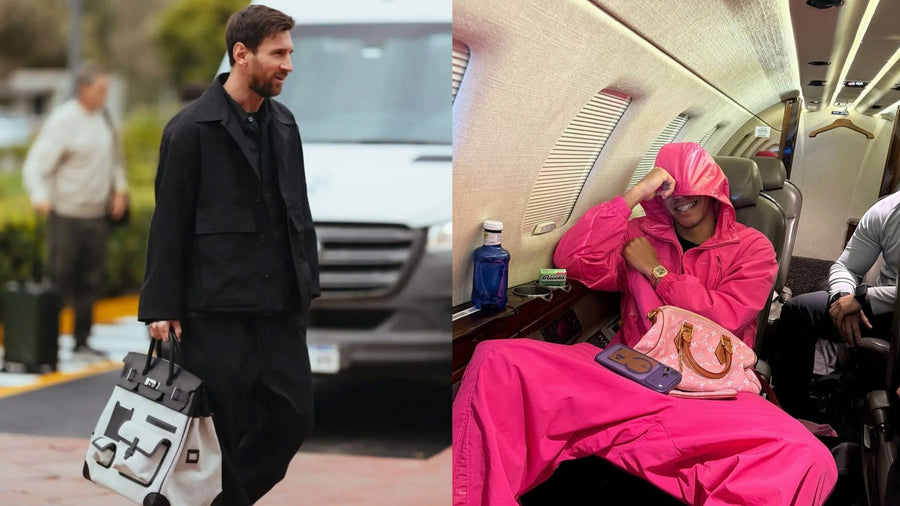
There's a specific moment. A second of footage, a frame in a music video, a photo at an after-party that nobody planned. The artist is wearing something nobody paid them to wear, nobody negotiated for, nobody placed there through a brand deal. They're wearing it because they wanted to. And that second changes everything.
This isn't advertising. It's not a sponsorship. It's something much harder to manufacture and far more powerful when it happens: genuine cultural validation. The kind that can't be bought with a budget, only earned through identity. And it's exactly the mechanism that turned garage brands into global icons over the past four decades.
Supreme. Stüssy. FUBU. Palace. Trapstar. Corteiz. Names that are worth hundreds of millions today but that all started the same way, close to a music scene, speaking its language, earning its trust without writing a single check. The history of streetwear is, in large part, the history of how music lends fashion the one thing fashion can never manufacture on its own: credibility.
The Moment Everything Changes
To understand why this mechanism is so powerful, you need to understand the fundamental problem that mainstream fashion has always had with authenticity.
When a major luxury house or a global sportswear brand pays an artist to wear their product, everyone knows. The deal is on Instagram. The press release went out. The contract was public. Manufactured authenticity, by definition, cannot be authentic. Real authenticity is recognized precisely because it wasn't purchased.
The streetwear brands that became cultural powerhouses through music figured this out before anyone else did. They weren't chasing endorsements. They were building belonging. They weren't trying to pay artists to wear their clothes. They were making clothes that said something, and waiting for the artists who needed to say that same thing to find them.
That distinction, which sounds small, changes everything. When an artist wears a brand because of what it represents rather than what it paid, audiences feel it. And when audiences feel it, the brand stops being a product and becomes a symbol.
Marketing academics call it "cultural capital transfer." In the streets, it's simpler: someone who matters puts you on. And once that happens, nothing is the same.

Supreme and 90s Hip Hop: The Original Blueprint
James Jebbia opened Supreme at 274 Lafayette Street in Manhattan in 1994. He didn't open a clothing store. He opened a gathering point for downtown New York's skate scene, a community that existed at the margins of mainstream culture but had its own visual code, its own vocabulary, its own way of moving through public space.
What Jebbia didn't predict, or perhaps understood better than anyone, was that the same streets were being occupied by another scene with no representation in conventional fashion: East Coast hip hop.
Wu-Tang Clan. Nas. Rakim. Big L. Artists who lived and breathed the same city, the same blocks, the same tension between the street and aspiration. When these artists found Supreme, it wasn't an accident. It was recognition. The brand was speaking a language they already spoke. The red box logo, the Barbara Kruger typography, the deliberately anti-commercial attitude of a store that limited access and made people wait outside, all of it communicated something about who you were if you wore it.
Nas in a box logo tee. RZA in a jacket. Mark Gonzales on a board. Supreme didn't pay any of them in the early years. The artists showed up because the brand was authentic to the scene they inhabited. And that authenticity, amplified by the visibility those artists provided, is what turned a 900-square-foot skate shop into the most influential streetwear brand of the century.
Three decades later, VF Corporation acquired Supreme for $2.1 billion. The value wasn't in the clothes. It was in what the clothes meant, and what they meant came from who wore them when nobody was paying them to.

Stüssy, FUBU, and the Ones Who Came First
Supreme didn't invent the mechanism. It perfected it.
Shawn Stüssy started in the early 80s in Laguna Beach, California, selling surfboards with his signature scrawled on them. What turned Stüssy into something bigger than a surf brand was its early contact with the hip hop scenes in New York and LA, particularly through the record stores and mixtape culture where clothes and music coexisted naturally. By the 90s, wearing Stüssy in New York didn't mean you surfed. It meant you understood.
FUBU tells the same story more directly, more explicitly. Daymond John founded it in Queens in 1992 with a stated purpose: For Us, By Us. A brand made by Black people, for Black people, in a fashion market that had historically ignored them. The moment that launched FUBU into the stratosphere wasn't an ad campaign, it was LL Cool J, who grew up in the same Queens neighborhood, wearing the brand's gear inside a Gap commercial. Inside the Gap ad, he'd stitched a FUBU logo into his clothes. The image spread. Sales exploded. The following year, FUBU did $350 million in revenue.
The pattern is always the same: an authentic brand identity, a music scene speaking the same language, an artist making the connection without anyone asking them to. What changes is the geography and the generation. The mechanism doesn't change.

How They Did It in the UK: Trapstar, Palace, Corteiz
If the first generation of music-driven streetwear was American, the second was unmistakably British.
Trapstar was born in London in 2005, founded by three friends from West London who were making T-shirts in their bedroom and selling them out of a car boot. The name says it: trap and star, the two worlds the brand wanted to bridge. Its growth was tied from the beginning to London's grime and drill scene, Skepta, Stormzy, Dave, artists who found in Trapstar a reflection of what they lived and what they aspired to simultaneously. Today, Jay-Z is a partner in the brand. The road from a car boot to that table wasn't a marketing plan. It was credibility built one artist at a time.
Palace came slightly later, in 2009, with an aesthetic that blended skate, rave culture, and a kind of absurdist British humor so specific that it seemed impossible to export on paper but irresistible when the right person wore it. The scene Palace captured was different from Trapstar's, more influenced by electronic music and post-punk than by grime — but the mechanism was identical: artists who showed up because the brand said something true about where they came from.
Corteiz is the most recent case, and arguably the purest. Clint Ogbenna founded it in 2017 from a London flat, built his community through surprise drops with GPS coordinates, and never paid anyone to wear the brand. They wore it anyway. Dave wore it. Central Cee wore it. Nike came asking. Corteiz accepted on its own terms, not Nike's. The message was clear: the credibility wasn't for sale, which was exactly what made it worth more than any check.

What Music Gives a Brand That Marketing Never Can
It's worth being precise about what music actually transfers to a brand when it adopts it organically, because it's not simply visibility. Visibility can come from many sources. What music provides is something more specific and harder to replicate.
Emotional context. Music reaches people in moments of heightened emotional receptivity, at a concert, driving at night, walking through the city with headphones in. When a brand appears in that context, it absorbs that emotion. Not in the manipulative way of an ad, but genuinely, because the artist chose to bring it there.
Tribal belonging. Music scenes are communities. When a brand enters that community through an artist, it doesn't enter as an outside guest, it enters as part of the tribe. People who buy it aren't just buying clothes. They're buying membership in something that matters.
Narrative without advertising. Every time an artist wears a brand in a video, at a show, in an interview, they're telling a story about that brand without anyone having to write a creative brief. The narrative is organic, specific, situated. That kind of storytelling is impossible to fabricate, which is exactly why it's so effective.
Cultural longevity. Brands that build their identity through music tend to survive hype cycles better than brands that chase them. When the hype fades, and it always does, what remains is cultural meaning. And if that meaning was built genuinely, it stays.

Why Artists Choose Independent Brands
It's worth flipping the question: why would an artist with access to every major brand in the world choose an independent one?
The honest answer is that big brands usually don't say anything. Or they say too many things to too many people simultaneously, which amounts to the same thing. An artist building a specific identity, which is exactly what good artists do, can't wear a brand with no specific identity without creating dissonance.
Independent brands tend to be more specific than large ones precisely because they don't have the budget to speak to everyone. They have to choose who they're talking to, and because of that their message is clearer, more honest, more recognizable to the people inside that conversation.
When an artist wears an independent brand that resonates with their origin, their community, their aesthetic, they're not just wearing clothes. They're making a statement about what they value. About what they consider authentic. About who they are when nobody is paying them to be anyone.
That's exactly what a hip hop artist was doing with Supreme in 1997. What a grime artist was doing with Trapstar in 2012. And what's starting to happen in the Latin music scene of 2026.

The Latin Scene Is Writing Its Own Chapter
The pattern we've traced, independent brand, music scene, artist who shows up without a paycheck, transfer of cultural credibility, isn't Anglo-Saxon. It's universal. And in the Latin music scene of 2026, it's happening with a speed and intensity that has no precedent in Latin American streetwear history.
The reason is structural: Latin music is the most consumed genre on the planet. Bad Bunny, Karol G, Fuerza Regida, Ryan Castro, Myke Towers, Blessd, artists generating streaming numbers that outpace anything in English, are building their own visual identities. And those visual identities have to come from somewhere.
For years they came from American and European brands: Nike, Off-White, Chrome Hearts, Balenciaga. But there's a growing tension in that equation. American and European brands weren't built from the Latin experience. They don't speak the language of the diaspora. They don't know the slang. They don't get the joke. And the Latin artists who are at the top of their careers, who can now choose what they align with, are starting to choose differently.
They're choosing brands that come from where they come from. Brands that understand what it means to grow up between two cultures, two languages, the nostalgia of one country and the reality of another. Brands that don't need anyone to explain why a specific word is funny and meaningful at the same time.
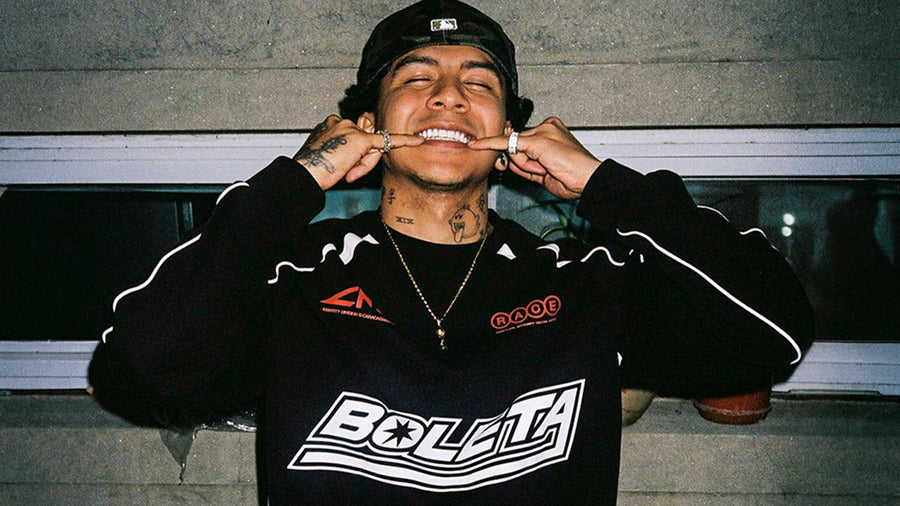
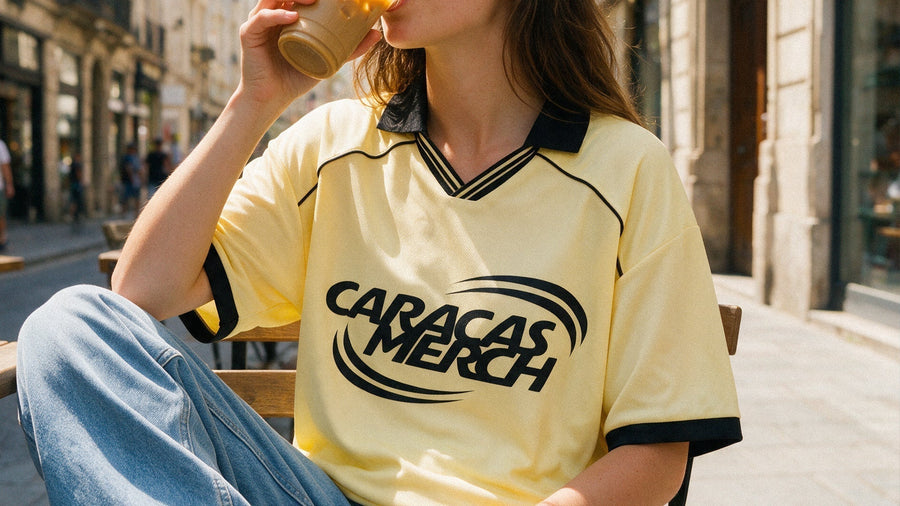
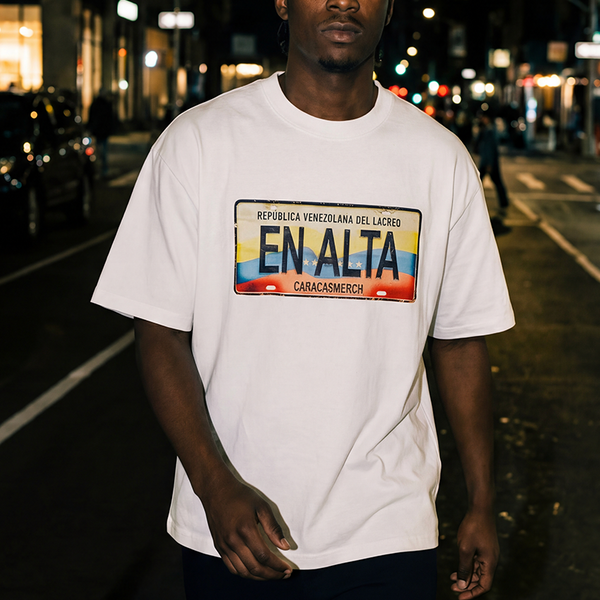
Caracas Merch is part of that chapter. A brand built from the Venezuelan diaspora, that constructed its identity from cultural pride before there was an obvious market for it, and that today exists in the same spaces where the artists and communities defining what it means to be Latin in 2026 exist, not as the result of a marketing plan, but as the result of being authentic before it was convenient to be.
Why Culture-Born Brands Last and Hype Brands Don't
There's a question worth asking at the end of all this: what separates the brands that built something lasting from the ones that only caught a moment of hype?
The answer, seen from a distance, is surprisingly simple: the ones that lasted had something to say before anyone was listening.
Supreme didn't wait for hip hop to validate them before building a point of view. They already had one. Corteiz didn't wait for Dave to wear their clothes before deciding what values they stood for. They already knew. Brands born from authentic culture, founded by people who belong to that culture, built from the inside out rather than from marketing toward the street, have something brands of opportunity can never buy: a genuine origin.
And that genuine origin is what artists detect when they choose. They don't choose the most famous. They don't choose the most expensive. They choose the one that says something true. The one that, when they put it on, says something about them that they actually want said.
Streetwear that matters has always worked this way. From the street to the stage, not from the marketing department to the street. That's the direction. It's the only one that works.

FAQ
Why is streetwear so connected to music? Because both emerged from the same communities and share the same values: authenticity, identity, and tribal belonging. Hip hop, grime, trap, and reggaeton are all genres that grew from street culture, and streetwear grew from the same place. The connection isn't coincidental, it's structural.
How did Supreme become so famous? Supreme grew in the 90s because its identity was genuine to the skate and hip hop scenes of downtown New York. Artists like Nas and Wu-Tang Clan adopted it organically, no sponsorship contracts, because the brand said something true about where they came from. That cultural validation was worth more than any advertising campaign.
What is Corteiz and why does it matter? Corteiz is a streetwear brand founded in London in 2017 by Clint Ogbenna. It grew without paid advertising, through surprise drops and the organic adoption of UK drill artists like Dave and Central Cee. Its model proved that in the digital era, cultural credibility can be built from scratch without outside capital, just authenticity and community.
Why do artists choose independent brands over major ones? Independent brands have more specific identities because they can't afford to speak to everyone. That specificity makes them more authentic to artists who are also building a specific identity. Wearing an independent brand that resonates with your origin is a statement, and artists who guard their image understand that.
What Latin streetwear brands are following this model? The Latin scene of 2026 is producing brands that replicate this pattern: born from diasporic communities, built with genuine cultural identity, adopted by artists who recognize something true in them. Caracas Merch is one of the most representative, a Venezuelan brand that exists in the same spaces where what it means to be globally Latin is being defined.
Does the Supreme model still work in 2026? The mechanism works. What changed are the channels. In the 90s, validation happened through MTV videos and magazine photos. Now it happens on TikTok, Instagram Stories, and concert clips that go viral in hours. The speed changed. The essence, an artist choosing a brand for what it represents, not what it paid, is exactly the same.
What's the difference between a cultural streetwear brand and a hype brand? A cultural brand has something to say before anyone is listening. A hype brand has something to sell after someone else made it famous. The first lasts decades. The second lasts seasons. The difference shows in the origin: whether it was born from a community or born from a market analysis.