


Raptor House: The Sound Venezuela Buried and Berlin Found
A car painter from Catia who quit music in 2008 because he felt guilty about what his own scene had become is booked to play Helsinki this Friday, August 14, at nine at night, in front of a Finnish festival crowd. Not a pitch. Not a Netflix logline. That is the actual working calendar of Pedro Elías Corro, a man who spent most of the last decade painting cars for a living, and it is the reason a lot of people outside Latin America are suddenly learning to say the words raptor house.
For twenty years this genre was Venezuela's sonic embarrassment. Barrio music, daytime party music, made by kids the media called "tuki" when they meant poor. It is now the first Venezuelan electronic sound with a passport of its own.
What is raptor house and why is everyone talking about it now?
Raptor house is an electronic genre built in the working class west side of Caracas in the late 1990s. Fast tempos, blown out bass, Afro-Caribbean percussion and stolen European radio samples, welded together at a speed that never asks permission. Before it had that name, people called it changa tuki, and that was not a compliment.
The reason it is landing in your feed in 2026 has dates attached. In November 2025, Esto es Raptor House, a 76 minute documentary directed by Roberto López Buschbeck and shot between 2023 and 2025 across Spain and Venezuela, premiered at In-Edit Barcelona.
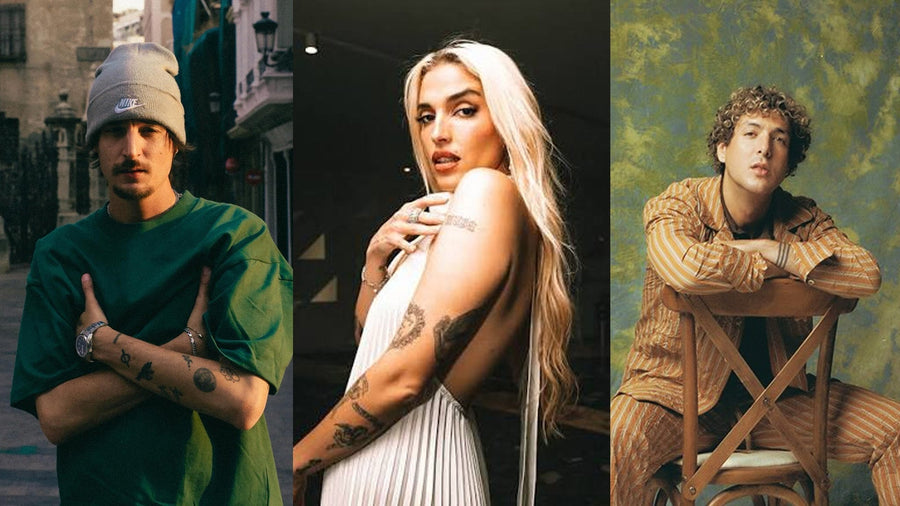
That same month, Rawayana and Akapellah won the Latin Grammy for Best Latin Electronic Music Performance with "Veneka," a track whose rhythmic spine comes straight out of this scene.
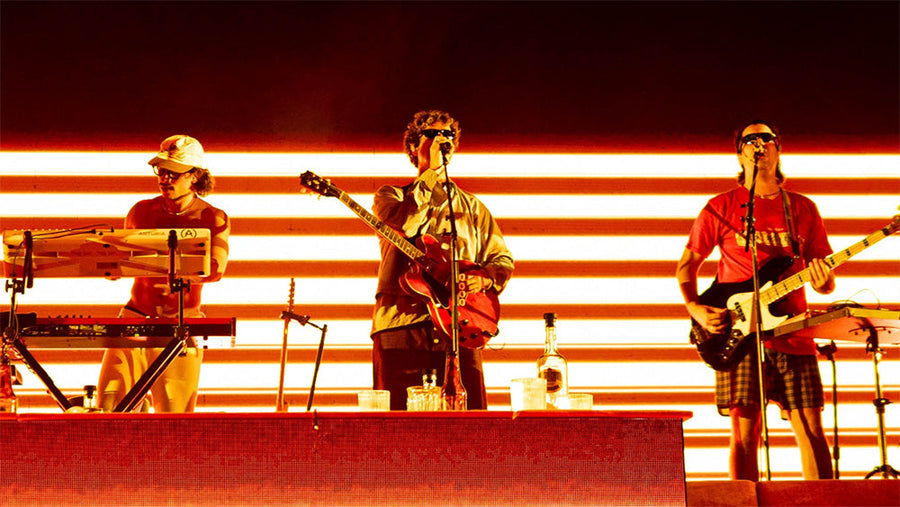
Then 2026 got busy. In July, DJ Babatr and DJ Yirvin played the TraTraTrax-curated stage at SOUNDIT Festival in El Prat de Llobregat, Barcelona, on a bill with Honey Dijon, Nina Kraviz and Helena Hauff. In August, Babatr sits on the Flow Festival lineup in Helsinki.
A genre Venezuelan television used as a punchline is now programmed as serious dance music. That took twenty-five years and one very specific act of stubbornness.

How raptor house was born in the barrios of west Caracas
Pedro Elías Corro grew up in Bloque 11 de Propatria, in Catia, on the west side of Caracas. He bought his first mixer in 1993 with money nobody on that block had lying around. His musical education was gloriously incoherent: Ray Barretto and Eddie Palmieri on one side, Queen and Led Zeppelin on the other, and Technotronic's "Pump Up the Jam" coming out of La Mega 107.3 FM one afternoon.
What he built out of that had no name yet. He took Belgian house and the techno arriving on bootleg discs, ran it through Venezuelan percussion and dembow, and pushed the tempo past what any European DJ would have held for a full set. Then he layered 90s radio samples on top. It sounded like Caracas at rush hour.
The circuit was the miniteca, enormous homemade sound systems run by neighborhood kids that powered block parties and high school dances. The name "Babatr" started as an affectionate joke, because a friend said he looked like a baba, a small crocodile. The "Raptor" half came from Jurassic Park.
He was not alone in it. DJ Yirvin, DJ Deep, DJ Armando, DJ Linares, DJ Elieser and DJ Byakko formed the core. "Las Lomas," from 2001, is still the track that explains the genre without explaining anything: hammering bass and a mid-song release of high keys that continues to detonate rooms in Berlin.
Distribution was fully analog and fully illegal. Hand-dubbed cassettes and burned CDs sold by buhoneros, street vendors working the door of the party. No contracts, no publishing, no metadata.
On August 21, 2005, the movement threw its first official celebration at the Parque Naciones Unidas sports complex. That was the ceiling for raptor house inside Venezuela, and also the beginning of the end.
Why raptor house disappeared for almost a decade
The parties were matinés, daytime raves, because nighttime Caracas did not forgive. In a city that spent years on lists of the world's most violent, dancing at three in the afternoon was not an aesthetic quirk. It was survival logistics.
The violence found its way in anyway. Fights outside the matinés became routine, and some ended in deaths. The government responded with rules that choked daytime parties out of existence. The press finished the job, turning "tuki" from a class slur into shorthand for malandro, a thug.
That is the real story, and it is not musical. Corro put it plainly: "When we would spin, they would say it was too Black, too niche, too marginal." Nobody was critiquing the arrangement. They were critiquing the baggy pants, the branded sneakers, the skin tone, the zip code.
Caracas has always split east and west, and that line was enforced harder than any genre boundary. Raptor house had the bad luck to be born on the wrong side of the map.
By 2008 and 2009 the movement had dissolved. Corro stopped producing. He has described feeling unappreciated and guilty about where things had gone. He went to work painting cars. Between 2014 and 2018 the genre effectively vanished from Venezuelan public conversation.
It went quiet at home, but not everywhere. Venezuelan producers already living abroad kept mutating the sound on their own terms: Pocz and Pacheko from the experimental Latin club side, Cardopusher from breakcore and hard techno. After 2014, British labels including Senseless Records started releasing and reissuing that material, and the genre became a secret that circulated better in London than in Caracas.
The pattern will look familiar if you know Brazilian funk carioca, Colombian guaracha, Chicago ghetto house or Baltimore club. Sounds born poor, criminalized at home, canonized abroad two decades later. What makes raptor house different is that its revival ran through a Bandcamp page its creator uploaded during a pandemic, with no expectations attached.

How DJ Babatr took raptor house from Catia to Berghain
In 2018 Corro did something that looks small and turned out to be everything. He named the genre himself. Until then people said "hard fusion," "street house," or the sneering changa tuki. Raptor house was a rebranding done from the inside, a way of walking the stigma off.
During the pandemic he started producing again and put his catalog on Bandcamp with no commercial plan attached. Miami producer Nick León, whose ear was already tuned to Latin bass, found the files. In 2022 the two released "Xtasis" through Colombian label TraTraTrax.
"Xtasis" was named track of the year by the specialist electronic press. A record built on a rhythm from Catia topped critics' year-end lists across Europe and North America.
What followed moved fast. His debut vinyl EP, The Tribe (Baila), came out in 2023 via sonidoaca. That summer, nineteen international producers, among them Kode9, Merca Bae and BADSISTA, remixed his classics.
That August he began a monthly NTS Radio residency and played the Boiler Room in Barcelona during Primavera Sound. Berghain and Tresor followed, Berlin's two hardest doors, where a Latin American artist arriving on merit rather than on a trend cycle is still unusual.
Boiler Room's George Cox told him straight: "You broke through. Your life will change."
Corro never framed any of it as a business. "I didn't make this music thinking I could commercialise it, all I wanted to do was leave something behind," he told DJ Mag. That is exactly why the catalog aged so well. It was never engineered to be liked.

What raptor house means to the Venezuelan diaspora
Roughly 7.9 million people have left Venezuela according to UNHCR figures current to May 2025, with about 6.7 million of them settling elsewhere in Latin America and the Caribbean. That movement did not just relocate people. It relocated catalogs, memories and playlists.
Rodrigo Figueroa, a music specialist at the Central University of Venezuela, describes it as a search for national identity among migrants that gets stronger the further back it reaches. Raptor house came back to life outside the country before it did inside. It plays more often now in Madrid, Mexico City, Bogotá and Berlin than in the Cota 905.
There is something very Venezuelan in that reversal. The generation that left picked up as a flag the exact thing they were mocked for at home. Same pants, same sneakers, same beat that closed doors in Caracas in 2006 and opens rooms in Europe now.
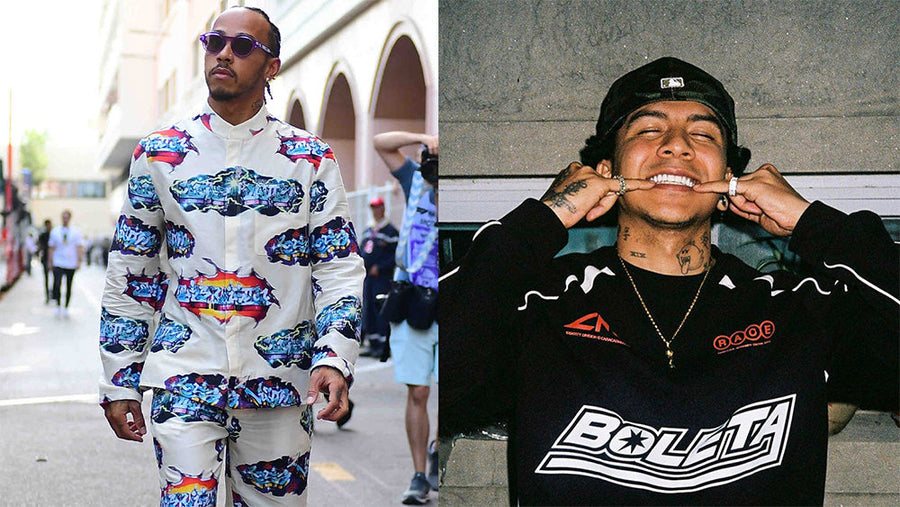
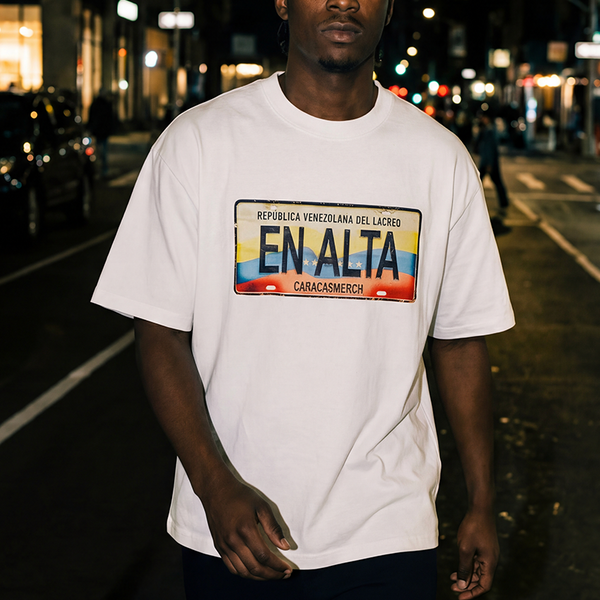
It is the logic behind brands like Caracas Merch too. Take the codes that got you laughed at, the slang, the aesthetic, the neighborhood, and hand them back as something wearable and unembarrassed. Not nostalgia. A refusal to negotiate where you are from while living five thousand miles from it.
It cuts both ways. When Rawayana and Akapellah collected a Latin Grammy for "Veneka," a word that started life as an insult aimed at Venezuelan women abroad, they ran the same play Babatr ran with "tuki." Take the slur, put a beat under it, make people dance to it.
Where raptor house goes after 2026
The next step is not recognition anymore. It is infrastructure. Esto es Raptor House is heading for a wider festival run and a theatrical release in Caracas, which would close the loop properly: the city that disowned the sound watching it on a big screen.
The more interesting movement is underground. Queer collectives in Caracas are throwing parties with raptor house as the core sound, unthinkable in the aggressively macho scene of the 2000s. A genre born from exclusion has become shelter for the excluded.
The hard part is still ahead, which is making sure the second generation is more than tribute. Young Venezuelan producers are already crossing raptor house with hard techno, guaracha and experimental reggaetón. If that lands, it stops being a rediscovered genre and becomes a living one.
The open question is not whether the world keeps applauding. It is whether Venezuela claims the sound back before everyone else finishes adopting it.
Conclusion
The remarkable part of this story is not that a DJ from Catia ended up at Berghain. It is that the sound arrived intact. Nobody sanded it down, nobody dropped the BPM to make it palatable, nobody stripped the percussion so it would read as "international." It landed exactly as it sounded at a Propatria matiné in 2003, overdriven bass and the impatience of a city with no time to spare.
Venezuela spent twenty years trying to sweep raptor house under the rug. The trouble with hiding a rhythm is that it keeps playing. And when somebody finally lifts the rug, it sometimes turns out to be the best thing you had.
If any of this landed, go through the collection. The same identity markers that got people mocked in Caracas are worn on purpose now, in every city the diaspora reached. Put headphones on, play "Las Lomas," and you will get it in about forty seconds.
Frequently asked questions about raptor house
What is raptor house music?
Raptor house is an electronic dance genre from the working class west side of Caracas, Venezuela, developed in the late 1990s. It fuses European house and techno with Afro-Caribbean percussion, dembow and 90s radio samples at very high tempos. Producer Pedro Elías Corro, known as DJ Babatr, created it. For years it was dismissively called "changa tuki."
Who is DJ Babatr?
Pedro Elías Corro, a producer from Bloque 11 de Propatria in Catia, west Caracas. He bought his first mixer in 1993 and built the raptor house sound alongside DJs including Yirvin, Deep, Armando, Linares, Elieser and Byakko. He quit music in 2008, worked as a car painter, and returned during the pandemic. He now plays Berghain, Tresor and major European festivals.
What is the difference between raptor house and changa tuki?
Same music, two names, very different baggage. "Changa tuki" was the street term that Venezuelan media turned into a class-based insult tied to crime and poverty. "Raptor house" is the name Babatr adopted in 2018 to define the genre on his own terms and detach it from that stigma.
Why did raptor house blow up internationally?
A traceable chain of events. Babatr uploaded his archive to Bandcamp during the pandemic, Miami producer Nick León found it, and in 2022 they released "Xtasis" on Colombian label TraTraTrax. It was named track of the year by the electronic music press, which opened the door to Boiler Room, NTS Radio, Berghain, Tresor and the European festival circuit.
Where can I listen to raptor house?
DJ Babatr's catalog is on Bandcamp and streaming platforms, including "Xtasis" with Nick León and the EP The Tribe (Baila). Start with "Las Lomas" from 2001, the obvious entry point. His NTS Radio residency sessions are archived, and his Boiler Room set from Barcelona is online too.
What does "tuki" mean in Venezuela?
"Tuki" began as a class-based slur for working class Caracas youth, aimed at how they dressed, danced and spoke: tight pants, caps, branded sneakers. The people it targeted eventually claimed it as an identity. It is the same reclamation arc as "veneka," an insult against Venezuelan women abroad that the diaspora turned into a badge.
What Venezuelan streetwear brands are worth following right now?
A wave of labels founded by Venezuelans at home and in the diaspora build from real cultural references, meaning slang, neighborhoods and music history, instead of tourist shop imagery. The useful filter is documentation. If a brand can tell you where a design comes from and why, it is culture. If it cannot, it is a flag on a shirt.