

Merida
· 3 min read
Gabriel Maldonado
Contents
Share
For the past few days, I’ve been wondering when the last time I was in Mérida was.
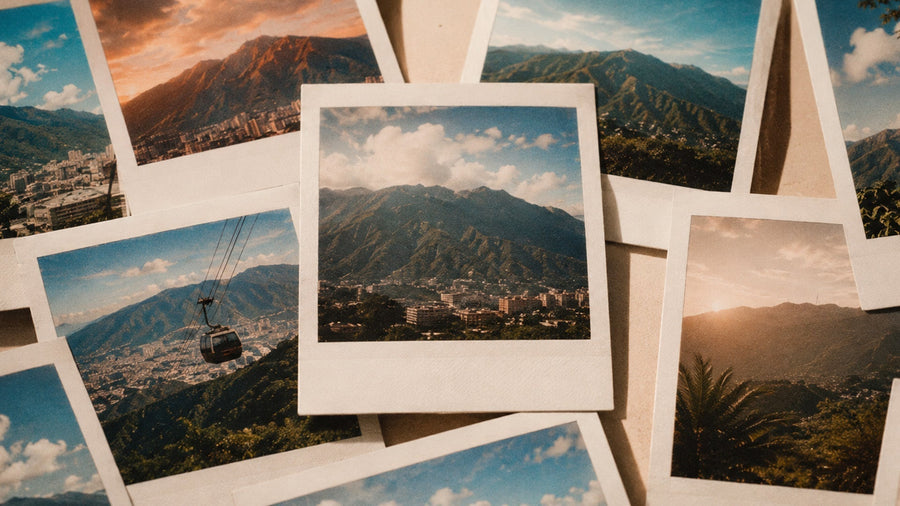
I started collecting memories there when I was very young. I can still picture the routes clearly in my mind. I know how to get there from San Cristóbal, and I know the way from Caracas as well. The difference between the two routes is striking: one because of the distance, the other because of the kind of road it is.
When you travel to Mérida from Caracas, or from northern Venezuela, you have to go through Barinas, taking a road that carries you from the flattest landscapes all the way to some of the highest points in the country. You pass through several towns; the ones I remember most are Pueblo Llano and Santo Domingo. Along this route, you climb up the backs of the mountains. It is a road that carries the cold with it, filled with fog and daunting curves.
There is something incredible about arriving in Mérida from its highest points, passing the Mucubají Lagoon and the mountain peaks — places filled with warm, welcoming people, in contrast with the cold that surrounds them.
The warmer route from San Cristóbal, on the other hand, takes you through the middle of the mountains, allowing you to look upon them with a certain reverence as, from El Vigía onward, they slowly begin to wrap themselves around you. This road climbs too, although it neither feels nor is as steep as the one coming from Barinas. Along the way, enormous rivers stretch beside the road, and you pass through Mérida’s famous tunnels, which I always found fascinating.
Both routes were always full of groups of motorcyclists. That is one of my favorite memories, and one of the reasons I sometimes think it would be nice to own a motorcycle and ride through the mountains.
Whenever I traveled by car with my family, listening to whatever CD I had burned myself, I would watch those groups closely as they took those curves at high speeds without the slightest hesitation. I was always amazed by them.
And after all this, I still haven’t figured out when I was last in Mérida. All the Christmases I spent there blur together, along with all the times I went to eat at La Nota, whether it was the one on Las Américas or the one near Las Heroínas.
I’m not certain, but the last time may have been in 2015. It was the only trip I ever took to Mérida without my family. I went with some friends to see La Vida Bohème. The concert was held in a theater whose name I can no longer remember.
That night, I went drinking at a few bars downtown. I remember running into one of my favorite artists from the Venezuelan music scene, José y El Toro. He was just about to release his first album, Retrato, which, to me, remains one of the finest records our music has produced.
I spent a couple of nights in Mérida. I went to Garage Bar, and by chance, Caseroloops was playing there. I remember myself being so young then, perhaps even a little innocent. I had a wonderful time.
Mérida is beautiful at night.
And even if that wasn’t truly the last time I was there, in my memory, it is.
So now I find myself wondering: what is Mérida like today? Are those same bars still there? Is the café near the residence where I stayed still open?
And if it isn’t, I hope there are new places waiting there — places I might get to know someday.
Retrato, José y El Toro

Venezuelan writer and author of two books: Un Verano (2020), published under the pen name Sebastian Clark, and Otoño in October (2023), published under the pen name Berenice. As a writer and editor at Caracas Merch, he explores Venezuelan identity, melancholy, and collective memory from the diaspora.