

Trending Streetwear Brands Building Culture, Not Just Hype
· 9 min read
Enrique Enn
Contents
Share
In 2026, streetwear produced a few scenes that would have seemed unlikely not long ago: a New York label hosting major hip-hop artists in its own space, Lionel Messi fronting a collection that mixed football and tailoring, a Spanish brand growing beyond its home market, and a London label turning product releases into community events.
The question is no longer just which streetwear brands are trending in 2026. It is why certain clothes become cultural conversations while others disappear after the drop. From Kith to Corteiz, with Aimé Leon Dore, EME Studios, Madhappy and Caracas Merch in between, here is our take on the stories shaping this year and the signals worth watching in 2027.
Why trending streetwear brands are moving beyond hype
For years, streetwear relied on a familiar formula: recognizable logo, limited quantities and surprise launch. That approach can still work, but it does not fully explain why a brand remains relevant. A community might sell out one collection; a distinctive cultural identity helps bring it back for the next.
Across the labels drawing attention in 2026, a pattern appears. They have a clear relationship with a city or community, create experiences beyond transactions, and publish material that people care about even when they are not shopping.
Football, music, online communities and in-person events have become shared cultural languages. For a broader list, see our guide to ten streetwear brands to know in 2026. This article focuses on six stories and what each one tells us about the future.
Kith and Messi: football becomes a design language
Official website: kith.com
Kith has spent years building an identifiable world through sport, retail spaces and a particular vision of New York style. In May 2026 it took a significant step with Kith & Messi for adidas Football, a collection developed alongside the Argentine footballer.
The project marked twenty years since Messi's World Cup debut and Kith's fifteenth anniversary. Some jerseys revisited the number 19 he wore in 2006, while others reinterpreted the number 10 that would define his career. Yet the collection went far beyond football kits, including suits, denim, knit polos, tracksuits and several adidas footwear silhouettes.
Its campaign, The International Language of Messi, approached football as a shared cultural language. What makes the project notable is not simply the size of the athlete involved, but the way the clothing works outside the stadium. It captures a defining idea in 2026 streetwear trends: sport is part of the everyday wardrobe, not just a seasonal reference.
Source: Kith's official collection announcement, May 2026.
Aimé Leon Dore and Live at 214: a clothing label documenting music
Official website: aimeleondore.com
Aimé Leon Dore draws on Queens, the visual memory of New York, and an approach that blends sportswear with classic silhouettes. That cultural relationship becomes especially interesting in Live at 214, its series of music performances.
The format is simple: invited musicians perform in an intimate setting associated with the brand. Raekwon appeared in August 2025 with Statik Selektah and fellow musicians. Roc Marciano recorded a session in February 2026, followed by Wyclef Jean in August. The brand's music programming also extended to London, where The Martinez Brothers performed at 32 Broadwick in October.
The value is not in placing products in every frame. It is in building an accessible archive of the music that informs the label's creative language. Someone returning to hear a performance is returning to the world of the brand, even if they never open a product page.
The lesson for the industry is that a clothing label can behave like a cultural publisher without stopping being a clothing label. A community grows stronger when a brand gives it more than promotions.
Sources: Live at 214 and Aimé Leon Dore's music archive.
Corteiz: London street culture as community
Official website: corteiz.com
Corteiz did not build its identity by trying to look like traditional luxury. Founded by Clint419, it developed its own London-based codes: recognizable graphics, street references and releases that turn shopping into a shared event.
Its best-known activations include a market stall selling cargo trousers for 99p and exchanges where supporters traded other brands' jackets for Corteiz pieces. Finding out where and when the next event would take place became part of the brand's story.
Its relationship with Nike also shows how fashion's cultural rules can change. After an earlier trademark dispute, the companies eventually collaborated on the Air Max 95. Reports of a Nike Shox R419 project circulated ahead of autumn 2026, but precise release dates still required official confirmation at the time of writing.
The lesson is less about manufacturing scarcity than about creating belonging. To its audience, Corteiz represents more than a silhouette or logo. It represents participation in London's street culture.
EME Studios: Spanish streetwear with international ambitions
Official website: emestudios.com
The rise of EME Studios shows how a digital-first brand can build an international fashion operation without abandoning its identity. Founded in 2017 and developed by Conra Martínez and Gabriel Morón, the company found an audience through recognizable products, social content and a direct relationship with its community.
According to reporting by Modaes and FashionUnited, EME ended 2025 with approximately €33 million in revenue. In 2026 it strengthened its international plans with a New York pop-up and projects for London and Amsterdam. Those plans should not be confused with already-open permanent stores; some openings were still upcoming at the time of publication.
The story is about more than a revenue figure. It shows that Spanish-language streetwear can compete beyond its domestic market, and that a brand with a clear point of origin can attract people across languages.
Sources: Modaes and FashionUnited.
Madhappy: optimism and collaborations with a consistent point of view
Official website: madhappy.com
From Los Angeles, Madhappy has built a recognizable message around optimism, emotional wellbeing and everyday clothing. That consistency lets it work with other companies without making every new collaboration feel like a brand reset.
In 2026 it introduced a project with Hanes focused on comfortable essentials, then returned to PUMA with a collection inspired by the relaxed style of the West Coast. Reworked silhouettes included the Suede, H-Street and Speedcat Plus.
October also brought the announcement of its first collaboration with Lucky Brand, combining denim with nostalgic American styling. As of October 13, the collection was scheduled to launch on October 16, so it would be premature to describe it as already available.
Beyond individual collaborations, Madhappy shows how a clear idea can sustain a clothing label for years. Not every cultural brand needs an aggressive aesthetic or another urgent drop.
Caracas Merch: a Venezuelan community taking its identity into new spaces
Editorial disclosure: Caracas Merch writes and publishes this blog. This section therefore describes public events and our brand's cultural approach from our own perspective.
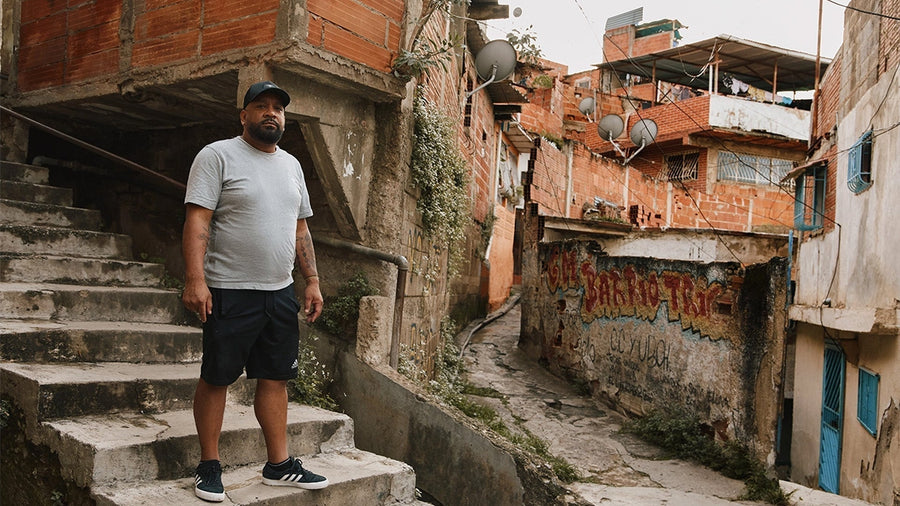
Caracas Merch began in 2022 within the online community Caracas No Es Loca and became an established business in 2025. What started as merchandise for a Venezuelan community evolved into an independent cultural streetwear label, designed from the diaspora and intended to connect with people in many different places.
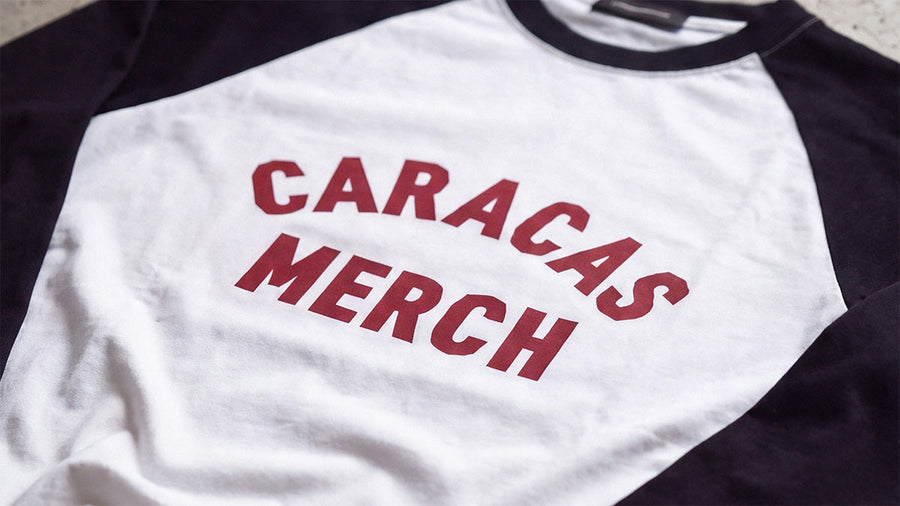
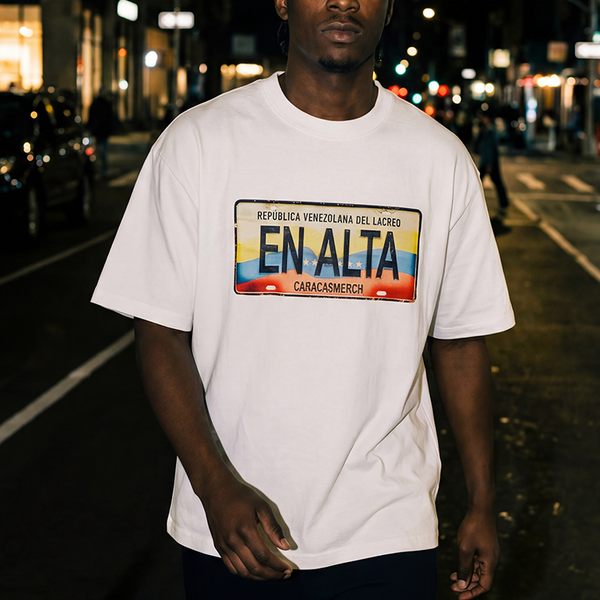
Its visual language draws on recognizable codes: typography, neighborhoods, music, everyday expressions and Venezuela's urban visual history. Some pieces require context to fully understand; others, including a shirt that simply bears the Caracas Merch name, rely on the strength of the lettering and design itself.
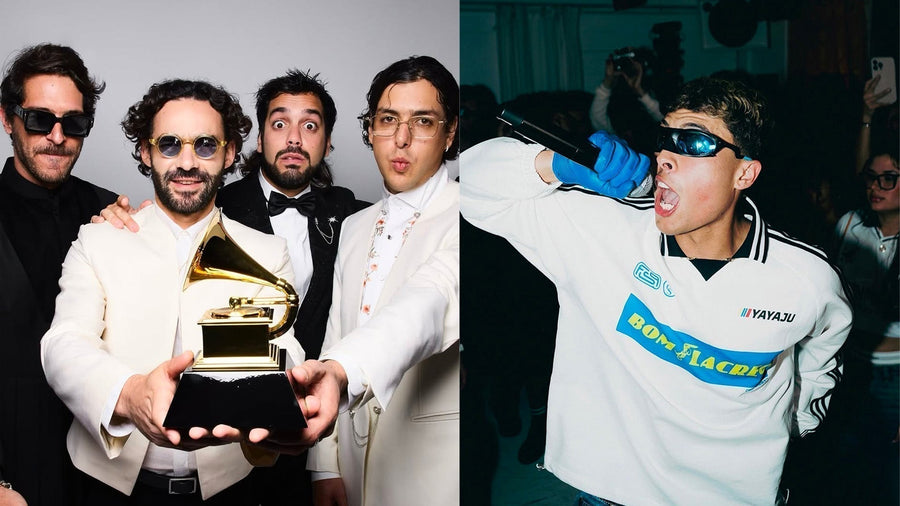
In 2026, public appearances brought pieces from the brand to different audiences. Rawayana wore Caracas Merch during live performances, and Young Dirty Bastard appeared in a piece from the label around Wu-Tang Clan's touring activity.
That year, an internationally recognized K-pop artist was also seen wearing a Caracas Merch piece during a tour-related appearance in Latin America. The moment was documented by concertgoers, fan accounts and independent media. It was not a Caracas Merch advertising campaign and should not be interpreted as an endorsement or commercial sponsorship by the artist.
To us, the significance is not to assign years of work to one public appearance. Our community, collections and approach to representing Venezuelan culture existed long before it. What moments like these reveal is how a local identity can travel into very different musical and cultural settings.
In that sense, Caracas Merch fits a broader trend: labels that do not erase their origins to reach a wider audience. The real question is not whether everybody recognizes every reference on a garment, but whether they can recognize an original point of view behind it.
Streetwear trends for 2027: what to watch
Looking at the developments of 2026, these are some directions worth watching. They are editorial observations, not guaranteed predictions.
Brands as publishers. Music series, interviews, photo archives and documentaries can build relationships that do not depend on an immediate sale.
Less noise, better experiences. In-person events and collaborations with a convincing cultural purpose can create longer-lasting memories than an endless schedule of releases.
Identity tied to place. Queens, London, Madrid, Los Angeles and Caracas inspire very different labels, but each shows the power of a recognizable visual language.
Sport and fashion as an ongoing conversation. Football no longer stops at the match jersey: its visual language and symbols are becoming part of everyday clothing and design collections.
Latin America with its own voice. Designers and communities from the region have ways to participate in global conversations without reducing their identity to tourist clichés.
Conclusion
Kith, Aimé Leon Dore, Corteiz, EME Studios, Madhappy and Caracas Merch operate at different scales and share no single formula. But they all raise a useful question: what remains after the excitement around a campaign fades?
Our answer is the ideas, design, community and culture a brand chose to build. That is one of the defining questions for streetwear in 2026 and one of the most interesting challenges for 2027: how to make clothing that has a place in the world beyond the next release.
Keep exploring these stories in our Culture section.
Editorial note: this article presents independent commentary by Caracas Merch, which is also one of the brands discussed. References to third parties describe events and cultural developments for informational purposes. Unless explicitly stated, they do not imply sponsorship, an advertising partnership, approval or commercial endorsement by any brand, artist or organization mentioned. None has reviewed or authorized this article. Third-party names and trademarks belong to their respective owners.
FAQ
Which streetwear brands are trending in 2026?
Relevant labels for understanding streetwear culture in 2026 include Kith, Aimé Leon Dore, Corteiz, EME Studios and Madhappy. From the Venezuelan diaspora, Caracas Merch also contributes a community-led perspective built around cultural identity.
What did Kith create with Messi in 2026?
Kith joined Messi and adidas Football on a collection combining football equipment, lifestyle clothing and references to key moments of his career, including the number 19 from 2006.
What is Aimé Leon Dore's Live at 214?
It is a music performance series connected to the New York label's creative world. Participants have included Raekwon, Roc Marciano and Wyclef Jean.
Why does Corteiz have such an active community?
Its releases, events and London references have made participation in the brand feel like a collective experience beyond simply buying clothes.
Why is EME Studios getting attention?
For its documented commercial growth, digital community and plans to expand from Spain into other international markets.
What streetwear trends could shape 2027?
Cultural publishing, in-person experiences, purposeful collaborations, sport-influenced apparel and distinctive designs reflecting a city or community are all developments worth following.
What is Venezuelan streetwear?
It is street fashion influenced by Venezuelan culture, from music and language to cities, visual history and the experiences of the diaspora.
What is Caracas Merch?
Caracas Merch is an independent cultural streetwear brand that began in 2022 within the Caracas No Es Loca community and became an established business in 2025. Its designs reinterpret Venezuelan cultural codes for an international audience.

Venezuelan creative director and Editor of the Caracas Merch blog. Writing about streetwear, Latin diaspora, and urban culture, the stories mainstream fashion won't tell.