

10 Brands Stepping Up for Venezuela After the Earthquake (and How to Join Each One)
· 12 min read
Enrique Enn
Contents
Share
On June 24, 2026, two earthquakes brought the country to its knees. Before the first plane of international aid had even touched down, Venezuelan brands were already moving. Here's what they're doing, and how you can join in from wherever you are.
Thirty-nine seconds. That's all there was between one and the next.
At 6:04 in the evening, on an ordinary Wednesday, the kind that in Venezuela smells of San Juan and drums, the ground moved with a magnitude of 7.2. Before anyone could grasp what was happening, the second one hit: 7.5. The strongest the country has felt in more than a century. La Guaira was left unrecognizable. Entire buildings on the ground. Caracas woke up the next morning counting cracks in its façades, families sleeping in the plazas out of fear of the aftershocks that wouldn't stop coming.
And the diaspora, those millions of Venezuelans scattered across twenty, thirty, forty countries, woke up with their hearts in their throats and the worst kind of helplessness there is: wanting to help your people from the other side of the map, with no idea how.
If you're reading this with that weight on your chest, this one's for you.
Because while the world organized its tons of aid and its rescue teams, something happened that shouldn't surprise us but moves us anyway: Venezuelan brands didn't wait for permission. They didn't wait for anyone to show up from outside. Each one grabbed whatever it had on hand, an app, a fleet, a store, a factory, a website built overnight, and put it to work for people. And some of the biggest brands on the planet, who owe Venezuela nothing, looked our way too.
This isn't just a list of where to donate. It's a portrait of who we are when things get ugly. Here are ten.
1. Yummy: the super app that became an emergency room
Yummy is the app that taught Venezuela to order a delivery, a ride, a medicine, all from your phone. It was built by a Caracas native who bet on the country when the rest of the world was steering clear of it. That DNA, believing in Venezuela when no one else would, is exactly what kicked in when the ground shook.
Within hours they launched Yummy SOS, a platform to report structural damage with a photo and GPS location, so rescuers would know where to dig first. They put their logistics network, that fleet of motorcycles and cars that normally carries burgers, to work on free emergency deliveries of water, food, and medicine to shelters and cut-off homes. They gave free rides to paramedics, firefighters, and rescue workers.
And for those who want to give money, the boldest move of all: Yummy matches 25% of every donation, up to $100,000. Every bit you give weighs more than you think.
How to join in: head to sos.yummyrides.com to report or donate (Pago Móvil and international card).
2. Ridery: the fleet that became a humanitarian supply line
Ridery is the other great Venezuelan startup story of the decade: the country's first ride-hailing app, built with 100% national capital, against the eternal chorus of "that's not profitable here, you're crazy." They built it to prove that in Venezuela, it can be done. And when the country needed someone to move things from one point to another, they already had the army in place.
After the quake, that same fleet became a logistics backbone. Ridery put its drivers to work picking up and moving essential supplies for free, water, medicine, non-perishable food, from collection centers to the points where NGOs distribute them. In a disaster, half the battle isn't getting the donations: it's getting them there. They solve exactly that half.
How to join in: follow @rideryapp to find out which collection center to bring donations to; they'll move them at no cost.
3. Farmatodo: the brand that's always been there
There are brands you can't remember entering your life, because they were simply always there. Farmatodo is one of them: part of the Venezuelan landscape for generations, the pharmacy that's also a market, a meeting point, a lifesaver on a Sunday at midnight. That closeness, built over decades, is what makes it so effective now, it already has the network, the stores, the trust. It didn't have to improvise.
It opened up its website and app, even for donating from abroad, channeling every bolívar toward Cáritas Venezuela and the Voluntary Dividend for the Community (DVC). Those funds become medical supplies, food, clean water, diapers, and hygiene products: exactly what's needed when a family has lost everything. And if you're in Venezuela, you can donate right at the register of any store while you shop.
How to join in: donate at farmatodo.com.ve or at any register.
4. Caracas Merch: the culture you wear
Here we pause for a moment. Because this one is us, and I'd rather say it plainly.
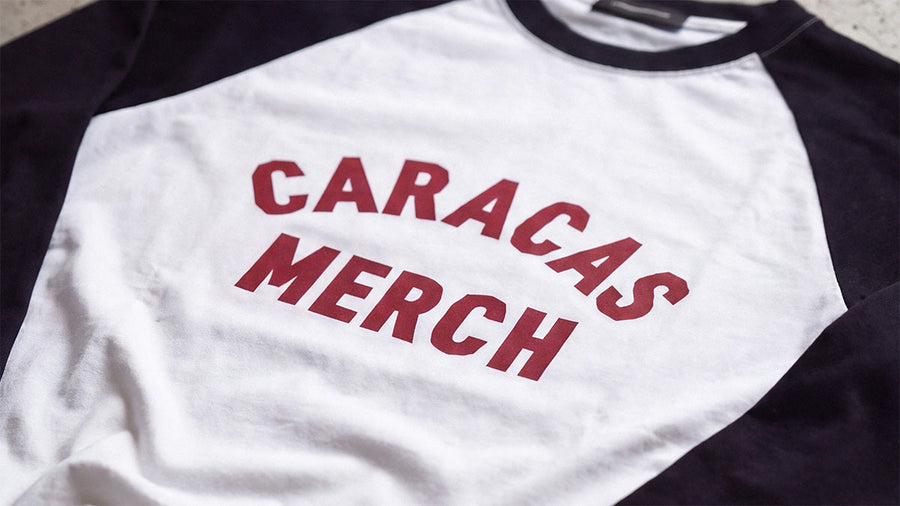
Caracas Merch was born from a conviction: that our culture deserves to be seen by the whole world. That what's Venezuelan, our streets, our music, our way of being, deserves to be worn with your head held as high as any other flag on the planet. And that's not something we pull off alone: it's made possible by the people who chose to wear Venezuela, on a street in Madrid, in Miami, in Buenos Aires. We just try to live up to them. Venezuela as an aesthetic. Caracas as a flag.
And a flag isn't for sunny days. It's raised, above all, in the storm. So when the very ground this whole thing is named after split in two, there wasn't much to think about. We did what we could, on two fronts:
The help map. We built caracasayuda.com overnight, with our own hands: a real-time map where anyone can mark where help is needed and where it's offered. Connecting whoever has directly with whoever needs, no middlemen, no red tape, no excuses.
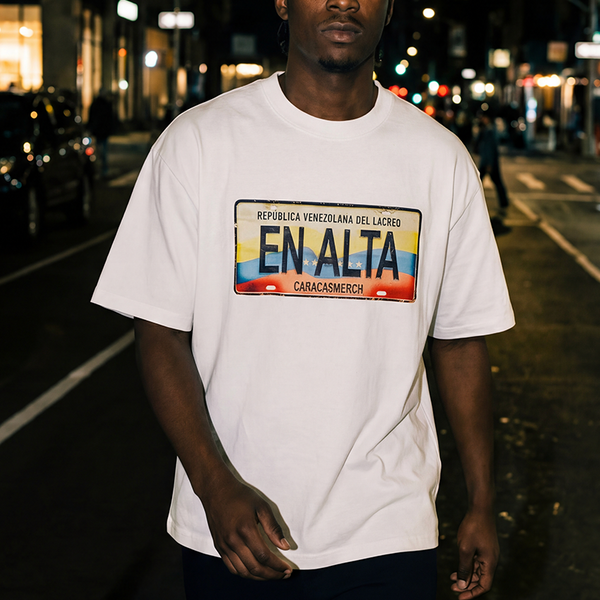
The Concrete Tees. We released the Corazón e' Piedra line: a concrete heart split right down the middle, because that's exactly how the country felt that afternoon. But concrete is also what Caracas is made of, and concrete gets rebuilt. They're the Concrete Tees ,blue, white, pink, and black, and 100% of the profit goes straight to Venezuela through the We Love Foundation campaign. Not a percentage. Not "a part." All of it. You put on the tee, and that money crosses the ocean back home.
We're not the biggest brand on this list, and we don't need to be. This is what we built it all for: so that the day it hurt, we'd have a way to return the embrace.
How to join in: open the map at caracasayuda.com, or grab a Concrete Tee at caracasmerch.com.
5. Banesco: the bank that doubles whatever you give
A simple move, and that's why it's brutal. One of the country's largest private banks set up an account that doubles every donation. For every bolívar people put in, Banesco puts in another, and the whole thing goes to the Venezuelan Red Cross. Your donation is worth double without you doing anything more than giving it.
It's the kind of gesture only an institution with real muscle can make, and instead of putting out a pretty statement and washing its hands, it put that muscle to work for the emergency.
How to join in: find the official Banesco campaign account and transfer. Always double-check it's the official channel.
6. Digitel: because sometimes helping is letting a mother hear her son's voice
After the quake, the country's connectivity collapsed by nearly 60%: towers fell, the power went out, the lines were cut. And in a moment like that, being able to send a simple "I'm okay" is worth more than anything.
Digitel opened up free calls and text messages for 48 hours in the affected areas, Caracas, La Guaira, and the surroundings, so people could find their loved ones. It's not a donation in the classic sense, and it won't show up in any bank account. But ask any family that spent hours not knowing whether their people were alive whether that counts as help.
How to join in: share this information with anyone who has family in an affected area. Sometimes forwarding it in time is what saves the day.
7. Somos Cuadro: the brand that didn't send money, it sent what it knows how to make
Here the story gets intimate. Somos Cuadro is a young Venezuelan brand, part of that new generation reinventing the country's fashion. And when the ground shook, it didn't just transfer money: it did something more personal. It put its production line to work making underwear in every size to donate to collection centers, through the Sun.Risas Foundation.
Think about it for a second. Underwear is one of the last things anyone thinks to donate, and one of the first things needed to recover something as basic as dignity after losing everything. That a brand would use its factory, its know-how, to solve exactly that says everything about where the new Venezuelan fashion is headed: feet on the ground and heart in the right place.
How to join in: support them on their socials or donate directly to the Sun.Risas Foundation.
8. Sajú: buy something good and send every cent home
Same energy, different lane. Sajú, the Venezuelan eyewear brand, turned its product into a vehicle for aid: it donated 3,000 pairs of glasses whose sales go entirely to the Sun.Risas Foundation for the earthquake response.
It's an honest, beautiful model in its logic: you buy something you wanted anyway, and instead of the profit staying in the register, it goes straight to whoever needs it. Spending with a destination, no guilt.
How to join in: buy from Sajú knowing exactly where the money goes, or donate directly to Sun.Risas.
9. El Dorado: so the money arrives whole
For the diaspora, sending money is still one of the fastest, most direct ways to help family in the affected areas. The usual problem is the fees, which keep taking bites along the way until what leaves isn't what arrives.
El Dorado, a fintech with Venezuelan DNA, waived its fees for transfers to Venezuela during the emergency, so every dollar lands whole on the other side. In a crisis, the money that doesn't get lost along the way is literally food on a table or a medicine bought in time.
How to join in: use it to send money to your people without getting docked on the transfer.
10. Starlink: when the biggest company in the world looked at Venezuela
And we close with proof that this tragedy moved even those who owe the country nothing. Starlink, the satellite internet network from SpaceX, Elon Musk's company, began providing free connectivity to customers of Venezuelan carriers in the areas where ground infrastructure had collapsed entirely.
The technology is out of this world, literally: low-orbit satellites connecting phones without relying on the antennas and cables that came down with the quake. They started with Movistar customers in La Guaira and announced they'd work to extend it to Digitel and Movilnet as soon as possible. And in a disaster, restoring communication isn't a luxury: it's restoring the rescues, the coordination, the hope of finding someone alive.
How to join in: spread the word so anyone in an affected area with a compatible phone knows they can reconnect.
Before you donate: how to spot the scams
There's an uncomfortable truth about disasters: alongside the wave of solidarity comes, without fail, a wave of fraud. After the earthquake, dozens of fake campaigns and accounts appeared, designed to prey on people's good faith. Take 30 seconds before you give:
- Verify the official channel. Make sure the account or link comes from the brand's or organization's verified website or Instagram, not a screenshot forwarded three times over WhatsApp.
- Prioritize money over goods. In Venezuela there are suppliers who can buy what's needed; cash arrives faster and with more flexibility than a box of clothes crossing a border.
- Do a small test first. If you're sending money to a relative, send a small amount first and confirm it arrived before sending the rest.
- Be wary of extreme urgency. "Donate now or they'll die" is the scammer's classic play. Serious organizations always explain, calmly, where your money goes.
Caracas no es loca. Caracas takes care of its own.
If this tragedy made anything clear, it's that you don't need to be a government or a giant NGO to move the needle. An app built by one of our own who believed in the country. A clothing factory that stitched what was missing. A bank that doubles. A tee brand with a map built overnight. And yes, even the most famous rocket company in the world.
Everyone put in what they had. And that reflex, pitching in without waiting for someone up top to give the order, is maybe the most Venezuelan thing there is. We've done it in every blackout, every line, every border crossing. We're doing it again.
So if the question was "how do I help, from where I am?", you've got ten answers now. You don't have to do them all. Pick one. Jump in. And share this list with anyone else who wants to help and doesn't know where to start.
Because our people don't get back up alone.
They get back up with us.
🇻🇪 Fuerza, Venezuela.
Frequently asked questions
How can I help Venezuela after the earthquake from abroad? You can donate online to campaigns like Yummy's or Farmatodo's (they accept international cards), send fee-free remittances with fintechs like El Dorado, or buy Caracas Merch's Concrete Tees, whose profit goes 100% to Venezuela. It all happens from your phone, wherever you are.
Which Venezuelan companies are helping after the earthquake? Among the most active are Yummy, Ridery, Farmatodo, Banesco, Digitel, Somos Cuadro, Sajú, El Dorado, and Caracas Merch, along with global brands like Starlink that joined the response.
Is it safe to donate to these campaigns? Yes, as long as you use each brand's or organization's official channels. Avoid links forwarded over WhatsApp without verifying, and be wary of new accounts that pressure you with extreme urgency.
Can I help without giving money? Absolutely. Spreading verified information, reporting damage or missing people on platforms like Yummy SOS or the caracasayuda.com map, and connecting those who need help with those offering it also save lives.
How do the donations reach the affected areas? Most of these brands work with organizations already on the ground, Cáritas Venezuela, the Venezuelan Red Cross, the Sun.Risas Foundation, We Love Foundation, or with their own logistics network, as with Yummy and Ridery.

Venezuelan creative director and Editor of the Caracas Merch blog. Writing about streetwear, Latin diaspora, and urban culture, the stories mainstream fashion won't tell.